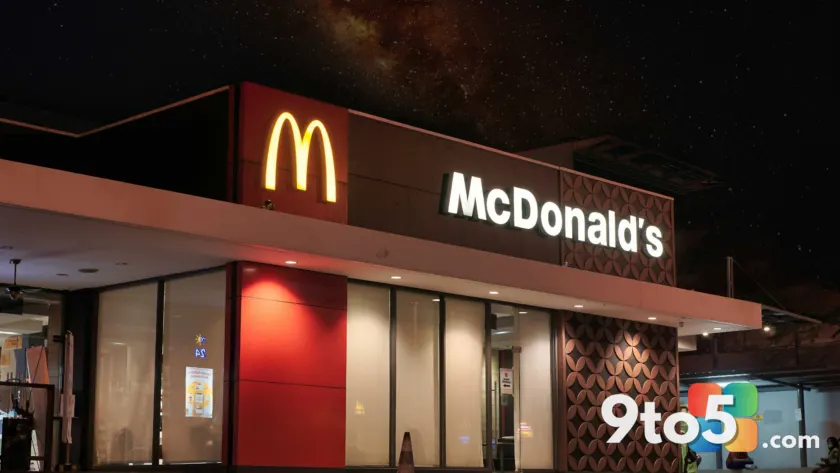
SpaceX has effectively pivoted from being solely a rocket manufacturer to becoming one of the world’s most powerful AI infrastructure landlords. By leasing out its massive Colossus data center in Memphis, Tennessee, the company is generating billions in revenue regardless of whether its own AI subsidiary, xAI, succeeds or fails.
This strategy mirrors the business model that turned McDonald’s into a real estate empire: instead of relying on the success of a single product (burgers or chatbots), SpaceX profits from the underlying assets (land and GPUs) that every competitor needs to operate.
The Colossus lease deals
Recent filings and reports reveal the scale of this shift. SpaceX recently signed a compute lease with Reflection AI, a pre-revenue startup founded by former Google DeepMind researchers. Under this agreement, Reflection pays $150 million per month for access to Nvidia GB300 chips housed at Colossus 2. If the lease runs its full term, SpaceX stands to earn approximately $6.3 billion from this single deal.
This is not an isolated incident. An S-1 filing earlier this month disclosed that Google agreed to pay SpaceX roughly $920 million per month for 32 months of compute access, totaling around $30 billion. Additionally, last month’s disclosures showed a major deal with Anthropic that could bring in up to $45 billion in revenue for SpaceX.
The implication is clear: whether xAI’s Grok model dominates the market or fails completely, SpaceX wins. The company has built the infrastructure—Colossus—that houses hundreds of thousands of Nvidia GPUs, including H100, H200, and next-generation Blackwell-class accelerators. It runs on Nvidia’s Spectrum-X Ethernet platform, specifically using Spectrum SN5600 switches. By renting this capacity to competitors like Google, Anthropic, and Reflection AI, SpaceX ensures steady income regardless of which AI model ends up winning consumer adoption.
Nvidia’s role as the industry backbone
If SpaceX is the landlord, Nvidia plays the role of the essential supplier collecting fees at every level. The Colossus facility originally went online in July 2024 with 100,000 Nvidia H100 GPUs and has since expanded to over 220,000 units. Nvidia supplies the hardware that powers these data centers and also holds investments in many of the companies renting the space, including Anthropic, Reflection AI, and xAI.
This dual position allows Nvidia to profit from both the infrastructure build-out and the operational success of the tenants. Whether a specific lab produces the dominant frontier model, the computing power required to train it was purchased from Nvidia, and the networking fabric is built on Nvidia silicon. This creates a closed loop where Nvidia captures value regardless of which software company emerges as the market leader.
Apple’s alternative strategy
While companies like Microsoft, Google, Meta, and Amazon spend tens of billions annually on GPU clusters and energy to build trillion-parameter models, Apple has taken a different approach. Its AI strategy relies on a three-tier routing system that minimizes reliance on expensive external compute.
Approximately 85% of user requests are handled locally on the device using small, efficient models built into Apple Silicon. Roughly 12% of queries are routed to Private Cloud Compute, Apple’s own server infrastructure running larger models in its data centers. Only the most complex 3% of tasks are sent to external partners, such as Google’s Gemini model, which Apple licenses for about $1 billion per year.
This design allows Apple to avoid the massive capital expenditure associated with training frontier models from scratch. By using a native Swift API called Foundation Models, Apple can swap between providers like Google or Anthropic without rebuilding its entire system. This strategy drives hardware upgrades and iCloud subscriptions while keeping AI inference costs low, effectively letting competitors absorb the risk of model development.
What this means for you
The narrative that the best AI model will automatically win the market is shifting. The real value lies in the infrastructure that supports these models. For everyday Windows users, this means the cost of AI services may stabilize as companies optimize for efficiency rather than raw power. It also highlights why your device’s local processing capability matters more than ever; offloading simple tasks to the cloud is becoming a premium service, while on-device AI remains free and private.
Source: Computerworld
Over to you: Do you think renting compute power is a smarter long-term strategy than building your own AI models from scratch?