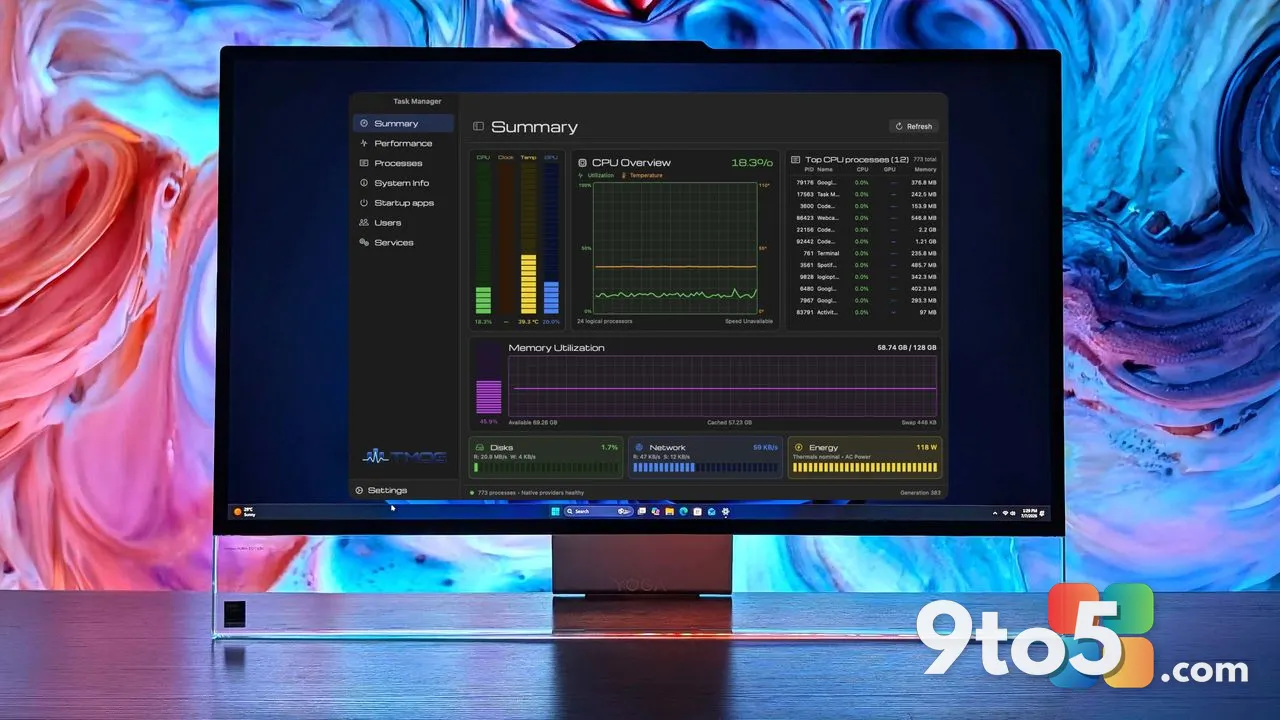
A new real-world evaluation is pushing back against lingering skepticism about Windows on ARM laptops. YouTuber DevonDoesTech recently integrated a Lenovo Yoga Slim 7x (Gen 11) into his broadcast setup, effectively conducting a Snapdragon X2 Elite stress test that lasted 17 continuous hours. The objective was to determine whether an ARM-based Windows laptop can genuinely replace a traditional desktop for heavy content creation workloads.
DevonDoesTech received the unit directly from Qualcomm and bypassed synthetic benchmarks in favor of actual production use. The configuration required OBS Studio, Meld Studio, DaVinci Resolve, and Discord to run simultaneously while encoding video for both a horizontal YouTube feed and a vertical Twitch channel. The stream ran for over 1,000 minutes without interruption.
According to DevonDoesTech, the system maintained stable performance throughout the entire duration. He noted that he never experienced a moment where he wished he had the raw power of a desktop computer, describing the experience as “kind of blowing [his] mind.” The test highlights how modern ARM silicon is handling multi-threaded encoding and real-time video processing without the thermal throttling or performance drops that earlier generations struggled with.
The Snapdragon X2 Elite stress test results
Sustained performance under load is often where ARM laptops historically diverged from their x86 counterparts. By forcing the laptop to maintain high utilization for nearly a full workday, this evaluation demonstrates that the Snapdragon X2 Elite can manage complex multi-app environments without noticeable degradation. This is a critical milestone for professionals who rely on their devices for extended production cycles, as it confirms that battery efficiency and thermal management are no longer competing priorities.
Data from an ARM blog post published in July 2025 suggests the software ecosystem is closing the gap even faster. The report indicated that 90% of time spent on Windows on ARM PCs is now spent on natively compiled apps. This shift is further supported by recent announcements like NVIDIA’s RTX Spark, which expands the ecosystem of optimized software for the platform.
Gaming limitations and the anti-cheat hurdle
While productivity and creative workflows showed strong results, gaming on ARM-based systems remains a complex area. Certain titles still struggle with emulation, and kernel-level anti-cheat software continues to be a significant hurdle. These games require direct hardware-level access that ARM architectures have historically found difficult to provide to x86-compiled anti-cheat drivers.
Qualcomm has acknowledged these challenges and has outlined plans for improvement. According to recent statements, the company is prioritizing anti-cheat support and has already begun integrating compatibility for Razer peripherals and other gaming hardware. While these fixes are still in the pipeline, the 17-hour productivity test suggests that the core computing experience is already mature enough for daily professional use.
How it compares to editorial reviews
DevonDoesTech’s findings align closely with our own editorial testing. The Lenovo Yoga Slim 7x earned a 4.5 out of 5 stars in our review, with our reviewer Cale Hunt calling it a top choice for students and small business professionals. After using a Snapdragon X2 device for a full month, Hunt reported being “totally sold on Snapdragon X2.”
Hunt also emphasized that for typical Windows users, ARM64 app compatibility is a complete non-issue. He pointed readers to the WorksOnWOA website, a community-driven database that tracks which applications run natively versus through emulation. This resource allows users to verify compatibility for their specific software before purchasing an ARM-based laptop.
What This Means for You
If you are considering switching to a Windows on ARM laptop for content creation or streaming, this 17-hour test provides strong evidence that the hardware can handle sustained professional workloads. The Snapdragon X2 Elite demonstrated the ability to manage complex multi-app environments and dual-stream encoding without noticeable performance degradation. While gaming compatibility still requires careful research, the gap for productivity and creative applications has narrowed significantly. Users can now prioritize battery life and thermal efficiency without sacrificing real-world performance.
How to Get It
The Lenovo Yoga Slim 7x (Gen 11) is available directly from Lenovo. The specific model tested features the Snapdragon X2 Elite processor, 32GB of RAM, and 1TB of storage. Lenovo also offers a variant with the Snapdragon X2 Plus processor for users who require slightly less peak performance at a lower price point.
Source: Latest from Windows Central
Over to you: Are you ready to make the switch to Windows on ARM for your creative workflow, or does gaming compatibility still hold you back?