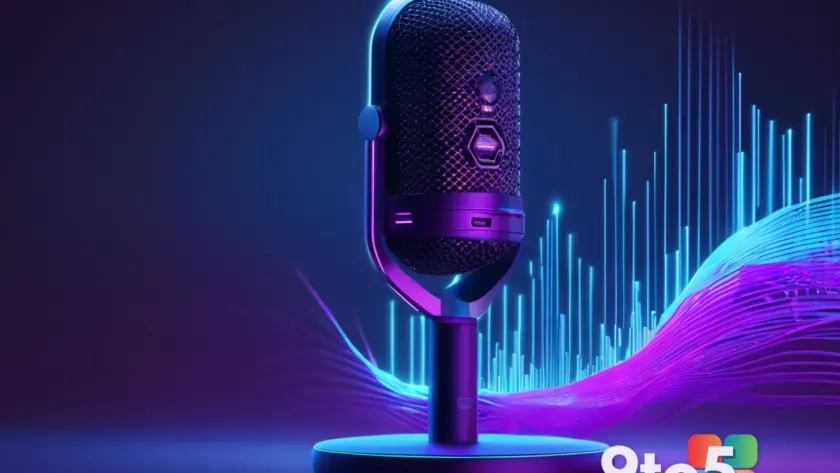
Microsoft Foundry voice agents now speak out loud. The company added native real-time voice capabilities to its agent platform, pushing its AI assistants beyond the text-first design that has long dominated the industry.
What changed in Microsoft Foundry voice agents
According to reporting by Neowin, the Foundry Agent Service now supports native real-time speech. In practical terms, that means developers building agents on the platform can now handle spoken conversation directly, without assembling a separate speech-to-text engine and a text-to-speech service.
For years, the default way to give an AI agent a voice was to bolt on third-party components. You’d send user audio to one provider, convert it to text, feed that text to the model, then send the model’s written reply to yet another provider to turn it back into audio. That pipeline works, but it adds latency, cost, and points of failure at every hop.
By baking real-time voice into Foundry itself, Microsoft is trying to remove that middleman. The platform now handles the full loop—listening, understanding, responding, and speaking—inside a single managed service.
From an architecture standpoint, this is meaningful. Instead of a ragged chain of external APIs, teams get one place to manage conversation flow, which tends to make debugging, monitoring, and billing far simpler.

Why real-time voice is such a hard problem
Voice is one of the fastest-growing frontiers in AI, and real-time conversation is the hardest part to get right. Unlike a chat box where a user can wait seconds for a reply, a voice agent has to respond the way a human does—quickly, naturally, and with the ability to interrupt, backchannel, and adjust its tone on the fly.
That kind of responsiveness demands very low latency. If there’s a noticeable pause, the conversation feels broken, and users quickly lose patience. Building that from scratch is a substantial engineering effort, which is why many teams have simply outsourced it to specialized voice APIs.
Microsoft’s move signals that it wants developers to stop assembling voice from spare parts and instead treat it as a first-class feature of the platform.
The direct challenge to Google’s Gemini Live
The timing and framing of this update are hard to miss. Google already offers Gemini Live, a real-time voice API that lets developers build natural voice conversations with its Gemini models. By adding native voice to Foundry, Microsoft is drawing a clear line in the sand against that offering.
For enterprise customers weighing their options, this positions Microsoft’s Foundry as a homegrown alternative to Google’s voice stack—one that can sit alongside the rest of the company’s agent and Copilot ecosystem rather than living in a separate product.
Contextually, this fits Microsoft’s broader push to make AI agents a core part of how businesses operate. The Foundry platform has been steadily expanding as a hub for building, deploying, and managing agents, and adding voice capability gives developers more reason to build and run their work on Microsoft’s infrastructure rather than elsewhere.

What this means for you
If you’re a developer or IT decision-maker building AI agents, this removes a chunk of work you’d otherwise have to handle yourself. Instead of managing multiple voice providers and juggling their APIs, you can now rely on a single service that handles the whole spoken-conversation loop.
For teams that have already invested in Microsoft’s agent tools, the update also means less reason to reach for outside services. That can simplify your architecture, cut integration overhead, and keep your agent’s data flowing within Microsoft’s ecosystem.
For everyday users, the payoff comes later: the agents you interact with—whether in customer support, productivity tools, or personal assistants—could feel more natural and responsive when they can actually carry on a real conversation instead of just typing back.
How to get it
Developers interested in the new voice capabilities should head to the Foundry Agent Service and check the current documentation for availability, pricing, and region support. Because real-time voice features often roll out gradually, it’s worth confirming that your subscription tier and region have access before you start building.
As with any new platform feature, starting small—prototyping a single voice-powered agent before scaling up—is a sensible way to see how the native speech performs against your specific use case.
Source: Neowin
Over to you: Would you rather talk to your AI assistant or keep typing—does native voice in Foundry change how you’d build agents?