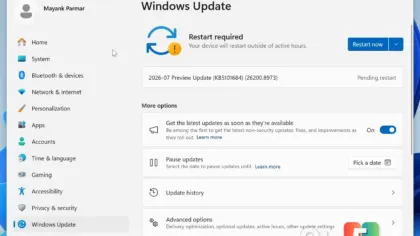
Microsoft has extended the deadline for its free Extended Security Updates (ESU) program for Windows 10 consumers by an additional year. Devices currently enrolled in the program will now continue receiving critical security patches until October 12, 2027.
This change was not announced via a press release. Instead, it appeared as an update to Microsoft’s official Windows 10 ESU documentation and as an editor’s note on a recent Windows Experience Blog post. Users who are already enrolled in the consumer ESU program will see their coverage automatically extended to the new date without any action required.
How to enroll or extend your coverage
If you have not yet enrolled, you still have options to secure free updates for your personal Windows 10 device. Microsoft offers three primary methods for enrollment:
- Payment: Pay a one-time fee of $30.
- Rewards Redemption: Redeem 1,000 Microsoft Rewards points.
- Settings Backup: Back up your Windows settings to your Microsoft account.
For users located in the European Economic Area (EEA), the process is simpler. Simply signing into Windows 10 with a Microsoft account grants access to the ESU license. This license can be applied to up to 10 devices linked to the same Microsoft account.
Eligibility restrictions and enterprise differences
The free consumer ESU program comes with specific limitations. It is designed strictly for personal devices. Systems that are joined to Active Directory domains or connected to Microsoft Entra (formerly Azure AD) as domain-joined devices are not eligible. Additionally, devices managed through Mobile Device Management (MDM) cannot participate in the free tier.
However, there is a distinction for cloud management: devices registered with Microsoft Entra—rather than fully joined—can still participate in the consumer program. This nuance matters for hybrid work setups where IT policies vary.
Enterprise customers operate under a different framework. They have access to a separate, paid ESU program that extends security updates for up to three years. The total cost for enterprise coverage is $427 per device, significantly higher than the consumer options.
What this means for unsupported hardware
This extension provides a critical buffer for users whose PCs do not meet the hardware requirements for Windows 11. Approximately 400 million active Windows 10 devices cannot officially upgrade due to restrictions involving TPM 2.0, Secure Boot, or supported processor lists.
Windows 10 reached its official end of support on October 14, 2025. After that date, Microsoft ceased providing standard technical support, feature updates, and regular security patches outside of specific channels like LTSC and ESU. The extension acknowledges that the transition to Windows 11 has been slower than anticipated, particularly given rising hardware costs in 2026 driven by memory pricing issues.
For users on older hardware, this extra year offers more time to save for a new PC or consider alternative operating systems like Linux. If you are relying on a Windows 10 machine that cannot upgrade, ensure you are enrolled via one of the methods above to maintain continuous protection against security threats.
Source: gHacks
Over to you: Will you upgrade to Windows 11 before October 2027, or keep using your current PC with extended security updates?
You may also like
 Windows 11 Canary builds bring targeted audio driver and settings improvements
 Microsoft drops new Windows 11 builds for June 19, including version 26H2 for Experimental
 Windows Insider builds for June 12: New unified update experience, typo-tolerant search, and 26H1 updates