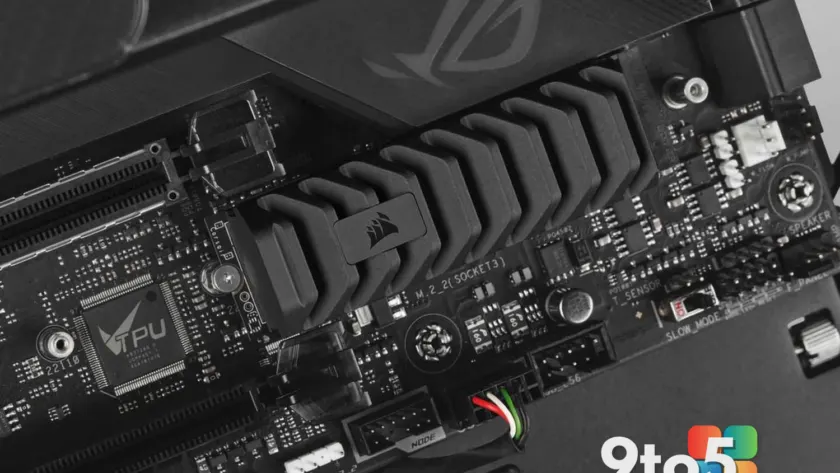
Even with PCIe 5.0 making its way into the mainstream, PCIe 4.0 remains the most practical choice for the vast majority of PC builders, gamers, and console owners. The real-world performance gap between the two generations is often negligible for everyday tasks, while PCIe 5.0 drives still command a significant price premium. According to recent evaluations from PCWorld, which has tested nearly three dozen PCIe 4.0 NVMe SSDs, the current market landscape makes 4.0 the smart default for most users.
The storage market has been volatile of late. Driven by the insatiable demand for data center infrastructure tied to the AI gold rush, SSD prices have soared and availability has tightened considerably. This means that while PCIe 5.0 is technically superior on paper, the cost-to-performance ratio of PCIe 4.0 is currently hard to beat. Whether you are upgrading a desktop, adding storage to a laptop, or expanding a gaming console, there is a PCIe 4.0 NVMe SSD that fits your needs and budget.
Below, we break down the top five picks from our extensive testing, covering everything from general-purpose desktop drives to specialized form factors for handhelds and consoles. Each selection is based on rigorous benchmarking, real-world transfer tests, and long-term value analysis.
#1 WD Black SN7100 / SanDisk Optimux GX 7100
Best Overall PCIe 4.0 SSD
The WD Black SN7100, now transitioning to the SanDisk Optimux GX 7100 name following Western Digital’s recent divestiture of the SanDisk brand, stands as our top recommendation for most users. It delivers exceptional sequential performance that rivals much more expensive drives, making it an ideal primary storage solution for gaming and content creation.
What sets this drive apart is its Host Memory Buffer (HMB) architecture. Instead of relying on a dedicated DRAM chip, the SN7100 utilizes a portion of your system’s RAM for caching. In practice, this allows for faster sequential read and write speeds than many DRAM-equipped competitors, though it can result in slightly weaker random 4K performance. For most users, the difference is imperceptible in daily use, but power users doing heavy file shuffling might notice a subtle difference compared to DRAM-based designs.
The 2TB model we tested ranked second only to the Lexar Play 2280 in our benchmarks, but with one crucial advantage: availability. While the Lexar drive is often out of stock, the SN7100 remains a reliable purchase. It comes with a standard five-year warranty and a 600TBW rating per terabyte, ensuring longevity for even the most demanding workloads.
If you are building a new PC or upgrading an existing one, the WD Black SN7100 offers the best balance of speed, price, and availability. It is the drive we recommend to friends and family looking for a no-fuss, high-performance storage upgrade.
#2 WD Blue SN5100 / SanDisk Optimus 5100
Best Budget PCIe 4.0 SSD
Calling any modern SSD “budget” feels like a stretch, but the WD Blue SN5100, now rebranded as the SanDisk Optimus 5100, represents the current value leader in the PCIe 4.0 space. It is the successor to the highly regarded WD Blue SN5000 and improves upon it in nearly every metric, particularly in sustained sequential throughput.
The SN5100 employs a DRAM-less HMB design, which keeps costs down without sacrificing too much real-world performance. In our testing, it ranked third among all HMB SSDs we have evaluated and took first place in our 450GB file transfer test by a significant margin. This means that for large file moves, backups, and game installations, it performs exceptionally well.
One notable detail is its single-sided design. This makes it compatible with a wider range of laptops and compact builds where double-sided SSDs might not fit due to clearance issues. It is available in capacities up to 2TB, though pricing has fluctuated due to market conditions. At the time of writing, it remains one of the most accessible PCIe 4.0 drives on the market.
Like the SN7100, the SN5100 carries a five-year warranty with a 600TBW rating per terabyte. If you are looking to save money without stepping down to PCIe 3.0 speeds, this is the drive to buy. It proves that you do not need to spend a premium to get reliable, fast NVMe storage.
#3 SanDisk Optimus GX 7100M NVMe SSD
Best PCIe 4.0 SSD for Steam Deck and Handhelds
For owners of gaming handhelds like the Steam Deck, ASUS ROG Ally, or Lenovo Legion Go, form factor is everything. The SanDisk Optimus GX 7100M is designed specifically for the 2230 form factor, which is shorter than the standard 2280 drive used in most PCs. It is the fastest 2230 SSD we have ever tested, and in some metrics, it outperforms even full-size PCIe 4.0 drives.
What makes the GX 7100M particularly impressive is its 4K random performance. Historically, HMB drives have struggled with random access speeds, but SanDisk has managed to deliver class-leading results here. This translates to faster game load times and smoother performance when streaming assets in open-world titles.
The downside is the price. The GX 7100M commands a significant premium over competitors like the Crucial P310, which remains a solid alternative for those willing to trade a small amount of performance for savings. However, if you want the absolute best storage expansion for your handheld, the GX 7100M is worth the investment. Prices may stabilize over time, but for now, it sits at the top of the performance hierarchy for 2230 drives.
#4 Seagate Game Drive PS5 NVMe SSD
Best PCIe 4.0 SSD for PS5
Sony’s PS5 requires a specific type of SSD to meet its performance standards for next-gen gaming. The Seagate Game Drive PS5 NVMe SSD is engineered specifically for this purpose, featuring a DRAM cache and a low-profile heatsink that fits perfectly within the console’s expansion slot.
The inclusion of DRAM is critical for PS5 compatibility. The console does not support HMB, meaning it cannot use system memory for caching. Without DRAM, an SSD relies on slower secondary caching methods, which can lead to performance bottlenecks in demanding games. The Seagate Game Drive avoids this entirely, delivering consistent, high-speed performance that meets Sony’s requirements.
In our testing, it ranked as the second-fastest PCIe 4.0 SSD for random operations, a testament to its robust controller and NAND configuration. Seagate also backs it with a generous five-year warranty and an impressive 1,275TBW rating, which is more than double the industry standard. This makes it an exceptionally durable choice for gamers who install and uninstall titles frequently.
While it is optimized for the PS5, the Seagate Game Drive is also fully compatible with any PC or laptop that has a PCIe M.2 2280 slot. It is a versatile drive that excels in both gaming consoles and desktops. Availability has been tight in recent months, but it remains a top recommendation for PS5 owners looking to expand their storage.
#5 Corsair MP600 Micro
Best 2242 Form-Factor SSD
The Corsair MP600 Micro fills a niche for devices that require a drive larger than the 2230 form factor but smaller than the standard 2280. Measuring 22mm by 42mm, it is designed for the 2242 slot found in certain Lenovo ThinkPad laptops and the Legion Go handheld.
Lenovo pioneered the use of 2242 slots in their consumer devices, and the MP600 Micro is the best storage upgrade option for these systems. While it is not the fastest PCIe 4.0 drive Corsair has made, it delivers performance that compares favorably to many standard 2280 drives, making it a practical choice for users who need to expand storage in compact form factors.
The MP600 Micro is particularly useful for ThinkPad owners who want to upgrade their base storage without dealing with the limitations of 2230 drives. It offers a good balance of performance and affordability, making it a solid choice for business and productivity users who need reliable storage in a small package.
What This Means for You
The current state of the SSD market means that PCIe 4.0 is not just a fallback option; it is the smart choice for most buyers. With PCIe 5.0 drives still carrying a premium and offering marginal real-world gains, PCIe 4.0 provides the best performance-to-price ratio available today. The AI-driven price surges have made high-end PCIe 5.0 drives less accessible, further cementing the value proposition of PCIe 4.0.
For most users, the WD Black SN7100 or WD Blue SN5100 will meet all storage needs. Gamers with handhelds should look at the SanDisk Optimus GX 7100M, while PS5 owners are best served by the Seagate Game Drive. Each of these drives has been rigorously tested and proven to deliver reliable performance in real-world scenarios.
When choosing an SSD, consider not just the speed but also the form factor, warranty, and TBW rating. A higher TBW rating indicates greater endurance, which is important for users who write large amounts of data regularly. Additionally, ensure that your motherboard or device supports the drive’s form factor and PCIe generation to avoid compatibility issues.
How to Choose a PCIe 4.0 SSD
Selecting the right PCIe 4.0 SSD involves understanding a few key factors: form factor, NAND type, and caching technology. The most common form factor is 2280, which fits standard desktop and laptop M.2 slots. However, handhelds and compact devices may require 2230 or 2242 drives.
NAND type also plays a role in performance and longevity. TLC NAND offers a good balance of speed and endurance, while QLC NAND provides higher capacities at lower prices but with reduced write endurance. Most modern SSDs use SLC caching to boost performance, but this can slow down during sustained writes. If you frequently transfer large files, look for drives with robust caching algorithms and high TBW ratings.
Caching technology is another consideration. DRAM-equipped drives offer better random performance and consistency, while HMB drives use system memory to achieve similar speeds at a lower cost. For most users, HMB drives are sufficient, but power users may prefer DRAM for demanding workloads.
Finally, always check the warranty and TBW rating. A five-year warranty is standard for quality drives, and a TBW rating of 600TBW per terabyte is a good benchmark for endurance. These factors ensure that your investment is protected and that the drive will last for years of heavy use.
The Current SSD Market Context
The SSD market is currently experiencing significant shifts due to the AI boom. Data centers require massive storage infrastructure, driving up demand for NAND flash and impacting consumer prices. This has led to price increases across the board, making value-oriented drives like the WD Blue SN5100 even more attractive.
PCIe 5.0 is gradually gaining traction, but it remains a niche product for now. The performance gains are most noticeable in synthetic benchmarks, while real-world applications often show minimal improvement. As PCIe 5.0 prices drop and compatibility becomes more widespread, it may become the new standard. However, for now, PCIe 4.0 offers the best combination of performance, availability, and value.
For buyers, this means that now is an excellent time to purchase a PCIe 4.0 SSD. You are getting near-top-tier performance at a reasonable price, without the premium associated with the latest generation. As the market stabilizes and PCIe 5.0 becomes more affordable, you will still have a fast, reliable drive that meets the needs of most users.
Whether you are building a new PC, upgrading an old one, or expanding your gaming console, the drives listed above represent the best options available. They have been tested extensively and proven to deliver consistent performance in a variety of scenarios. Choose the one that fits your needs and enjoy the benefits of fast, reliable NVMe storage.
Final Thoughts
The best PCIe 4.0 SSD depends on your specific needs, but the options listed above cover a wide range of use cases. From general-purpose desktop builds to specialized handheld and console expansions, there is a drive for everyone. By understanding the technical details and market conditions, you can make an informed decision that balances performance, price, and longevity.
As technology continues to evolve, PCIe 4.0 will remain a relevant and valuable standard for years to come. It offers a proven, reliable platform for storage that meets the demands of modern computing without the premium cost of newer generations. Whether you are a gamer, a content creator, or a casual user, investing in a quality PCIe 4.0 SSD is a smart move that will serve you well in the near future.
Source: PCWorld
Build details:
- 24H2
Over to you: Which PCIe 4.0 SSD are you adding to your current build, or are you waiting for prices to drop on PCIe 5.0 models?
You may also like
 NordLocker Review: Obsessively Secure, Delightfully Affordable Cloud Storage
 ProtoArc EM11 Pro Review: What a Budget Ergonomic Mouse Teaches the MX Vertical
 Tears of Metal Is the Roguelike Hack-and-Slash That Saved My Gaming Soul
 Halo: Campaign Evolved Review: A 25-Year-Old Classic Gets a Modern Makeover and Third-Person Camera