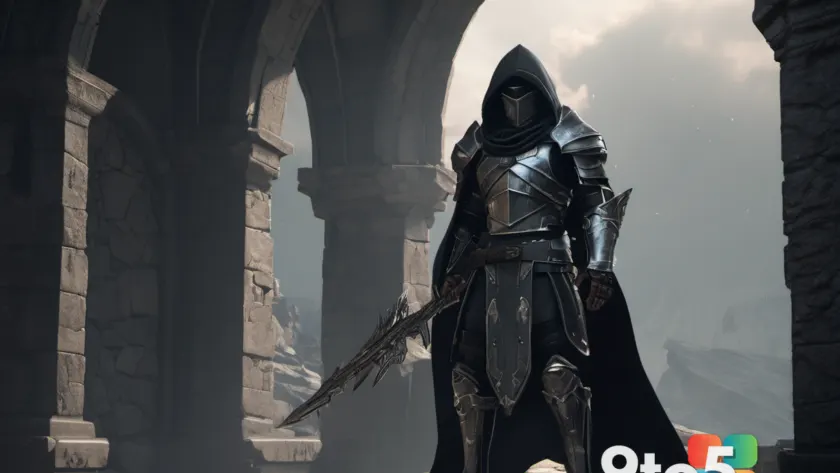
When Cold Symmetry first announced Mortal Shell 2, the Soulslike community had mixed expectations. The original game launched with a promising core concept but stumbled under the weight of clunky combat, confusing map design, and a mid-game identity crisis. After spending extensive time with the pre-release build, it is clear that this sequel is not merely an incremental update. It is a complete overhaul that addresses every structural weakness of the first title while sharpening the unique hooks that set it apart from the crowded genre.
According to the details shared by Windows Central, who provided the pre-release code for evaluation, Mortal Shell 2 strips away the friction that held back the original and replaces it with a tighter, more deliberate gameplay loop. The result is a game that respects the traditions of FromSoftware’s catalog while carving out enough distinct identity to stand on its own. If you have been waiting for a Soulslike that balances punishing difficulty with meaningful customization, this is the title to watch.
What This Mortal Shell 2 Review Covers
Before diving into the mechanics, it helps to understand where this game sits in the broader landscape of dark fantasy action RPGs. The Soulslike genre has exploded in recent years, with dozens of studios attempting to replicate the formula that made Dark Souls and Bloodborne global phenomena. Most of those attempts lean heavily on borrowed mechanics, resulting in games that feel like polished clones rather than distinct experiences. Mortal Shell 2 takes a different approach by centering its design around its Shell system, a mechanic that fundamentally changes how players engage with combat, movement, and progression.
This review evaluates the core gameplay loop, the expanded world design, narrative delivery, and PC performance across multiple hardware configurations. We also break down the practical implications for players who want to optimize their experience, whether you are a veteran of the genre or picking up a Soulslike for the first time. The goal is to give you a clear picture of what the game delivers, where it stumbles, and how it fits into your current gaming setup.

Combat Mechanics and the Shell System
The heart of Mortal Shell 2 is its combat, and it is where the sequel makes its strongest case. Right out of the gate, players are greeted with a camera system that offers two distinct modes: the default Cinematic over-the-shoulder view, and the highly recommended Action camera. The Cinematic mode keeps the character centered and close to the screen, which works fine for casual exploration but severely limits peripheral awareness during intense encounters. Switching to Action mode immediately improves your situational awareness, allowing you to track enemy telegraphs and environmental hazards without constantly adjusting your angle.
Once you settle into the Action camera, the core combat loop clicks into place. You have standard light and heavy attacks, a dedicated ranged option, a suite of abilities tied to your equipped Shell, and a collection of passive and actionable items. Healing is handled through multi-use items that scale in potency over time, while progression checkpoints are marked by Beacons. These Beacons function similarly to bonfires but require you to clear a short minidungeon to fully activate them and unlock their associated rewards. That small twist adds a layer of risk and reward to exploration that keeps momentum moving forward.
However, the true standout is the Shell system. You play as the Harbinger, a being capable of inhabiting the remains of fallen warriors known as Shells. Each Shell grants a unique set of passive and active abilities, and the current roster includes eight distinct options. My personal favorite during testing was Proxima, a Shell that channels lightning-based attacks. She can zap enemies from a distance, pull lighter foes toward her, or launch herself at larger targets. Her passive ability reduces incoming damage by half, whether the threat comes from melee or ranged attacks. As you invest Shell Points and Glimpse into her kit, you can stack additional damage resistance or unlock extra lightning procs that keep groups of enemies staggered and vulnerable.
For players who prefer different playstyles, the alternatives are equally compelling. Tiel transforms you into a shadow after a perfectly timed dodge, granting brief invisibility that lets you bypass encounters or reposition for a backstab. Gragu replaces standard healing items with a Resonant Heart that charges only through combat kills, rewarding aggressive play with a sustainable health pool. The system encourages experimentation, and with sixteen weapons spanning both melee and ranged categories, you can mix and match to create builds that feel entirely your own.
No system is without its growing pains. During testing, I occasionally encountered hit registration quirks where perfect parries failed because the enemy animation simply did not connect with the player model. This was not a timing issue on my end, but a collision detection flaw that can be frustrating during counter-heavy encounters. There were also moments where enemy knockback physics sent foes flying in unnatural directions, breaking the rhythm of longer fights. Additionally, certain finisher animations leave the Harbinger locked in place for a fraction of a second longer than ideal, leaving you exposed to secondary threats in multi-enemy scenarios. These are minor friction points, but they are worth noting before you commit to the game.

World Design and Narrative Delivery
Map design was the original Mortal Shell’s most criticized element, and Cold Symmetry clearly took that feedback to heart. The leap from the first game to the second mirrors the structural improvements seen when moving from Dark Souls 2 to Dark Souls 3. If you have ever felt lost in a Soulslike because of poorly signposted paths or unnecessary backtracking, this sequel will feel like a breath of fresh air.
The world is built around a central hub, but the surrounding areas are vast, interconnected, and deliberately designed to reward exploration. There are no random teleport zones to break your flow, and the level design uses natural landmarks, elevation changes, and environmental storytelling to guide you without holding your hand. I found myself picking a direction and stumbling into hidden side areas, secret wells, and tucked-away passages that rewarded curiosity with new weapons, Shells, and lore fragments. The sense of discovery feels intentional rather than accidental, which is a massive improvement over the original’s labyrinthine layout.
While Mortal Shell 2 carves out its own identity, it does not shy away from paying homage to the genre’s pioneers. One area is heavily focused on poison-based creatures and toxic environments, a clear nod to the rot-filled zones that FromSoftware made famous. Another notable moment involves a key NPC guide who bears a striking resemblance to Gwynevere from Dark Souls 1. These are not copy-paste moments, but rather respectful tributes that longtime fans will appreciate.
The narrative follows a more straightforward structure than typical Soulslikes, but it still relies on environmental clues, item descriptions, and cryptic NPC dialogue. You are the Harbinger, born from one of the uncorrupted Ova of the Undermother. After the first game’s events, the Undermother’s corpse crashed into the world, sparking a brief period of peace before corruption leaked from her remains. Madness spread, temples fell, and the Ova were tainted or stolen. Your mission is to reclaim them and restore balance to a world consumed by cultists, mutants, and raiders.
Story progression is tied to Shell development. After investing enough Shell Points and Glimpse into a specific Shell, you unlock five memories that reveal how that warrior met their end. These memories are concise, emotionally grounded, and easy to follow without requiring you to piece together fragmented lore from item tooltips. If you prefer a more direct narrative experience but still want the mystery and atmosphere of the genre, this approach strikes a solid middle ground.
PC Performance and Visual Fidelity
Performance is where Mortal Shell 2 proves that Unreal Engine 5 can be optimized responsibly. The evaluation was conducted on two distinct PC configurations: a desktop rig featuring an RTX 5080, Ryzen 9800X3D processor, and 64GB of DDR5 RAM running at 4K resolution, and a gaming laptop equipped with a mobile RTX 4060 at 1080p. Across both setups, the game maintained stable frame rates on High and Ultra settings, with or without ray tracing enabled. Occasional frame drops were so rare that they could be counted on one hand, which is a strong indicator that the engine implementation is well-tuned for modern hardware.
The visual presentation is a major step forward. The dark, atmospheric environments are rendered with impressive detail, from the weathered stone textures in the hub to the volumetric fog that rolls through the outer zones. Lighting and shadow work create a moody, cohesive aesthetic that matches the game’s tone. Many of the in-game screenshots capture cinematic moments that look more like concept art than real-time rendering, which speaks to the care Cold Symmetry has put into environmental composition.
That said, the PC version is not entirely free of issues. I encountered occasional hit detection inconsistencies and a tutorial message that remained stuck on screen for several minutes before resetting. These are the type of bugs that typically get addressed in post-launch patches, and given the game’s overall stability, they are unlikely to derail the experience. Players who prioritize a flawless launch may want to wait for the first patch wave, but the core performance baseline is solid enough that most will not notice the hiccups.
The decision to run on Unreal Engine 5 is notable, especially given the engine’s reputation for demanding significant optimization effort. Cold Symmetry has clearly invested heavily in performance profiling, and the results show. For players considering Mortal Shell 2 on PC, the hardware requirements are reasonable, and the visual payoff justifies the investment, particularly if you are running a modern GPU with ray tracing support.
What This Means for You
If you are a Soulslike fan who has been burned by sequels that promised innovation but delivered incremental updates, Mortal Shell 2 is worth your time. The game delivers a complete redesign of its predecessor’s core systems, with a combat loop that rewards adaptation, a world that respects your time, and a performance baseline that runs smoothly on both high-end and mid-range PC hardware. The Shell system alone is enough to set it apart from the crowd, offering build diversity that actually changes how you approach encounters rather than just swapping numbers.
For players who prefer a more direct narrative, the memory system provides clear progression without forcing you to decode fragmented lore. If you are a completionist, the eight Shells, sixteen weapons, and hidden side areas give you plenty to chase. The minor combat quirks and occasional collision bugs are unlikely to break the experience, but they are worth keeping in mind if you expect a flawless day-one launch.
From a practical standpoint, this is a $50 title that delivers substantial content and a refined gameplay loop. If you own a PC with at least an RTX 3060 or equivalent, you can run the game at 1080p or 1440p with high settings and stable performance. The option to enable ray tracing is available for those with newer hardware, and the visual upgrade is noticeable without demanding top-tier specs.
How to Get Mortal Shell 2
Mortal Shell 2 is available for purchase on PC through Steam. The standard edition launches at $49.99, which aligns with current pricing for mid-tier Soulslikes. There is no day-one PC Game Pass inclusion announced at this time, so players looking to try the game before buying will need to pick it up directly. Console versions have been discussed by the developer, but PC remains the primary platform for the initial release.
If you are unsure about committing to the full game, the Steam refund policy allows you to test the waters within the standard window. Given the performance stability and the depth of the Shell system, most players will find themselves invested within the first few hours. For those who already own the original, the sequel is a clear upgrade that justifies the purchase, especially if you were disappointed by the first game’s rough edges.
Source: Latest from Windows Central
Over to you: Which Shell build are you planning to run first, or are you sticking to a pure melee playstyle?
You may also like
 Lenovo IdeaPad Slim 3 First Impressions: Tackling the 2026 Budget Laptop Rush
 Cooler Master V8 ACE 3DHP Review: V8 Aesthetics Meet Serious Air Cooling Performance
 Peladn WO4 5600H Review: An Affordable, Upgradeable Mini PC for Home Labs
 HP OmniBook X Flip 14 Review: AMD Power Meets Convertible Flexibility