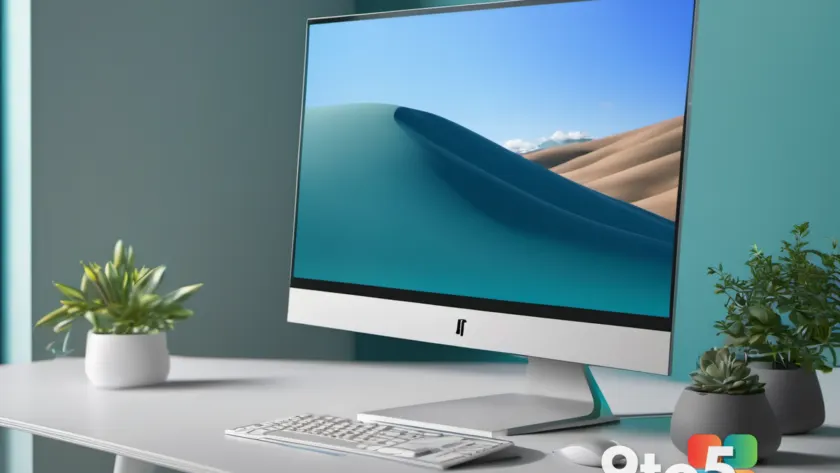
Microsoft has long treated the Windows desktop as a canvas for personalization, letting you swap wallpapers, accent colors, and transparency effects with a few clicks. Now, some Windows 11 users are reporting that this canvas has come with a surprise: Windows 11 desktop ads, shown as wallpapers where they least expected them.
According to reporting from Neowin, a subset of Windows 11 users have noticed what appear to be advertisements displayed across their entire desktop as wallpapers. The move has reignited an old debate about how far Microsoft will push monetization into a space users have always considered their own.
What the new Windows 11 desktop ads look like
The reports describe a wallpaper that isn’t a photograph or a gradient, but an advertisement that fills the whole screen. Rather than a small banner or a temporary notification, the ad takes over the desktop background itself — the one stretch of pixel real estate users expect to personalize their way.
Because the source describes this as something Microsoft “appears to be testing,” the rollout looks limited rather than universal. That phrasing points to a controlled experiment rather than a change pushed to every PC running Windows 11 — at least not yet.
Where this fits in Microsoft’s wallpaper history
This isn’t the first time Microsoft has experimented with dynamic backgrounds. The company has offered built-in wallpaper cycling for years, and its Bing Wallpaper app automatically refreshed desktops with the day’s featured Bing image. Those features were generally valued because they added visual variety without selling anything.
The distinction here matters: what users are describing isn’t a rotating photograph but an actual ad. If the test leans on the same infrastructure that powers dynamic wallpapers, it would represent a shift from “here’s something pretty” to “here’s something we’re paying you to look at.” That context is worth flagging, since the exact mechanics of this test haven’t been confirmed.
Microsoft has not publicly confirmed the specifics of this wallpaper experiment, so the details remain somewhat unclear. What is evident is that users are encountering advertising in a place they associate with personalization.
What this means for you
For most Windows 11 users, the practical takeaway is that your desktop may not be entirely your own anymore — at least not if you happen to be part of a test group. If you haven’t seen any ads, you likely aren’t enrolled in whatever experiment is running.
The broader implication is worth watching. Microsoft has steadily explored ways to monetize Windows 11, from suggested apps in the Start menu to promotional content in various corners of the OS. Full-desktop wallpaper ads would be a notable escalation of that trend, turning the single most visible element of your PC into a potential ad slot.
If you value a clean, distraction-free desktop, this is a good moment to check what your wallpaper settings actually are and where your current background is coming from.
What you can do about it
There are a few practical steps you can take to keep advertising out of your wallpaper:
- Set a static wallpaper. Choose a fixed image from your own photo collection instead of any dynamic or auto-refreshing background, so nothing external can override it.
- Review the Wallpaper settings. Open Settings and check the Personalization > Wallpaper section to confirm your source, and turn off any feature that cycles or updates your background automatically.
- Watch installed apps. If you use third-party wallpaper tools or dynamic wallpaper apps, make sure none of them are pulling promotional content into your background.
- Stay on a stable release. Experimental features like this often ship first through Insider channels. If you’d rather avoid surprises, the general release channel tends to be more conservative.
Why Microsoft might be testing this
Microsoft has been under pressure to find new revenue streams beyond its cloud and productivity businesses, and Windows 11 offers a massive installed base that’s attractive for advertising. Every screen a user looks at is, in principle, inventory.
But advertising on the desktop is a delicate balance. Users have grown accustomed to a clean Windows experience, and pushing ads too aggressively tends to generate backlash. The fact that this appears to be a test — rather than a shipped feature — suggests Microsoft is still gauging how much users will tolerate before deciding whether to expand it.
As of now, full-desktop wallpaper ads remain a limited experiment affecting a subset of Windows 11 users, not a change affecting everyone. Whether it becomes a permanent fixture depends largely on how the test plays out.
Source: Neowin
Over to you: If Microsoft made full-desktop wallpaper ads an official option, would you ever turn them on, or keep your desktop ad-free?
You may also like
 Microsoft Confirms Windows 11 Will Get Windows 10-Style Customization Options
 How to Set an Animated Profile Picture in Windows 11 (a GIF That Actually Moves)
 Windows 11 Is Getting a Native Battery Widget for the Widgets Panel
 Microsoft Confirms Windows 11 Performance Gains for Faster Boot and 8GB RAM PCs