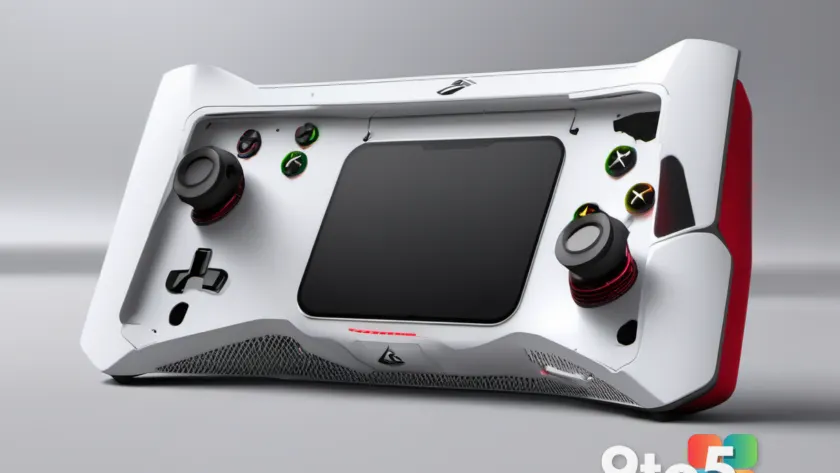
The handheld gaming PC market has gotten pricey, and the machine you’d expect to offer the best value is suddenly looking like a bargain. According to analysis from Windows Central, the ROg Xbox Ally is holding its price even as competitors drift further from affordable territory—making it an unexpected candidate for the smartest handheld purchase of 2026.
The ROG Xbox Ally Is Holding Its Price
At the time of writing, the white ROG Xbox Ally lists for $599.99 at Best Buy, which is exactly the same figure it launched at. That stability is rare in a category where prices have been climbing steadily. The product page shows an average 4.4/5 star rating from at least 930 customer reviews, and buyers seem content with the price-to-performance ratio.
Inside that white chassis sits AMD’s Ryzen Z2 A processor, a chip built on the older Zen 2 architecture. It’s deliberately positioned as a modern entry-level handheld, with performance closer to Valve’s Steam Deck than to the higher-end black ROG Xbox Ally X, or its discontinued predecessor, the original ASUS ROG Ally. In other words, Microsoft and ASUS have bundled a modest engine into a machine they’re willing to sell at a competitive entry price.
Steam Deck No Longer the Value Leader
For years, the Steam Deck was the benchmark for affordable handheld gaming. That title has quietly eroded. The cheapest Steam Deck now starts at $789 for the 512GB model, a steep jump from the sub-$500 launch pricing that made it a sensation. the ROG Xbox Ally undercuts that by roughly $190 at the shelf.
Valve does hold one advantage: the Steam Deck OLED’s screen delivers stronger contrast than the Ally’s FHD panel. But the Ally can push a 120Hz refresh rate, compared to the OLED’s 90Hz. You’ll need a lightweight PC game that runs smoothly to actually notice the smoother visuals, though the Ally’s variable refresh rate (VRR) support helps cut screen tearing and stabilize frame pacing along the way.
The “Runs Windows” Argument Falls Flat
The usual objection to a SteamOS handheld was the cost of a Windows license per device. That argument, however, is losing its bite. Lenovo’s Ryzen Z2 Go-based Legion Go S now sells for around $989.99, a notable climb from the $599.99 MSRP it carried during our review. The more powerful Ryzen Z1 Extreme Legion Go S model has crept to $1,579.99, though it occasionally drops to $999.99 in sales.
The blame for these hikes lands squarely on the memory crisis driven by large-scale AI hardware infrastructure, which shows no signs of easing. As components grow pricier, the OS-based value argument softens. Crucially, there’s nothing stopping anyone from installing SteamOS on a ROG Xbox Ally—or any Windows-based handheld. To date, none of the major players have locked their devices to Windows 11.

What This Means for You
If you’re shopping for a handheld under $1,000, the ROG Xbox Ally is suddenly one of the sharper options on the shelf. You get a legitimate Windows machine at an entry-level price, with the option to swap in SteamOS later if you prefer Valve’s gaming-focused interface. The trade-off is real: you’re getting Zen 2 performance, not the latest silicon, and the OLED screen advantage stays with Valve.
IT admins managing a fleet of work devices should note that the unlocked-OS situation has broader implications. A Windows-based handheld that can run a Linux gaming distro is a flexible asset, but it also means less vendor control over the software layer. For everyday gamers, though, the practical takeaway is straightforward—this is one of the few new handhelds you can buy near MSRP without waiting out a stock shortage.
How to Get the ROG Xbox Ally
The white model is currently available at Best Buy for $599.99, bundled with a three-month Xbox Game Pass Premium subscription. Unlike the ultra-high-end variants—such as the MSI Claw 8 EX AI+, which carries a $1,799 price tag and struggled to keep stock—this entry-level Ally holds inventory. If you want a sensible handheld well below the $1,000 line, it’s worth checking the listing before the memory crisis pushes the price up the way it has done to its rivals.
Source: Latest from Windows Central
Over to you: Would you grab the ROG Xbox Ally at its steady $599.99, or hold out for a Steam Deck price cut?