If you’ve been watching the GPU market recently, you’ve probably noticed that buying a standalone graphics card has become a financial gamble. The NVIDIA RTX 5090, which launched with an MSRP of $1,999 in 2025, is now listed on Newegg starting at $4,799.99. That’s more than double the original price, and it’s not even the most expensive variant available.
The situation has reached a point where the math simply doesn’t make sense for DIY builders. You can now purchase an entire pre-built gaming PC with an RTX 5090 inside for less than the card alone. This isn’t a rare anomaly either; it’s a widespread trend affecting multiple retailers and brands.
The RTX 5090 Price Problem
When you look at the current retail landscape, the RTX 5090 pricing has become completely detached from NVIDIA’s suggested retail price. The MSI Ventus 3X OC model sits at the lower end of the spectrum at $4,799.99 on Newegg, but other options push well beyond $5,000. For instance, the ASUS TUF Gaming RTX 5090 is listed at $5,429 on the same platform.
This inflation isn’t limited to third-party retailers. Even when you factor in the cost of other components, the standalone card remains the most expensive part of the equation. The situation has forced many enthusiasts to reconsider their building strategies entirely.
Pre-Built PCs Come Out Ahead
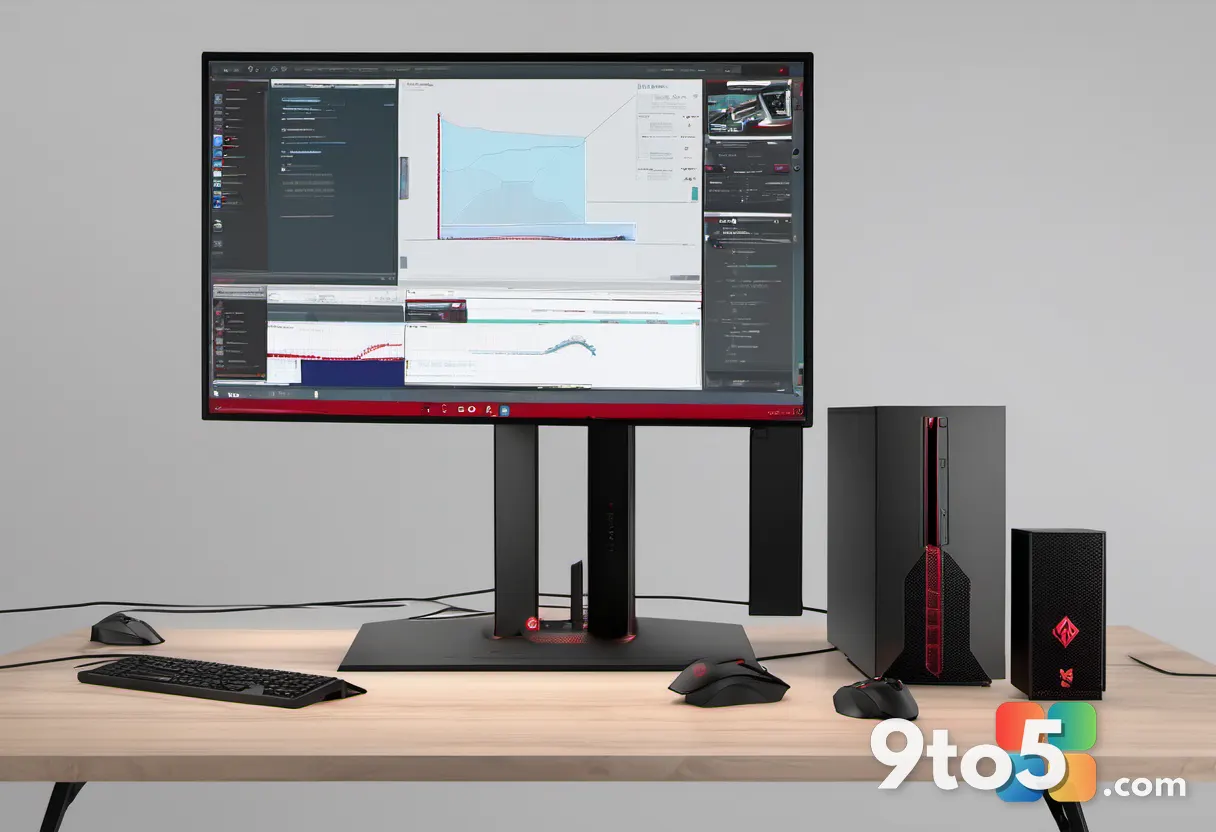
The HP Omen 45L desktop is the prime example of this market inversion. This system comes equipped with an NVIDIA RTX 5090 GPU, an Intel Core Ultra 7 265K CPU, 16GB of DDR5-6000 RAM, a 1TB M.2 PCIe 4.0 NVMe SSD, and a full suite of supporting hardware. At the time of writing, this Omen 45L model costs $4,389.99.
That price tag is $410 less than the cheapest RTX 5090 listed on Newegg. Even at its regular price of $5,379.99, the Omen 45L is still cheaper than the ASUS TUF Gaming RTX 5090 standalone card. You’re essentially getting a complete, high-end gaming rig for less than the cost of a single component.
The same trend appears at other retailers. Over at iBuyPower, you can configure a system with an Intel Core i5-14400F CPU, 32GB of DDR5 RAM, a 1TB M.2 PCIe 4.0 NVMe SSD, a 1000W PSU, and an NVIDIA RTX 5090 for $5,596. While this is slightly more than the standalone card, you’re still getting a fully functional system with room for future upgrades.
Why Prices Are So High
The current state of GPU prices is directly tied to the ongoing RAM and storage crisis. This shortage is sending NAND, DRAM, and other PC component prices into the stratosphere. Since these cards rely heavily on VRAM, the cost of the memory chips directly impacts the final price of the GPU.
NVIDIA responded to these rising costs by increasing the prices of GPU kits for its board partners in July. Companies like ASUS, MSI, Gigabyte, and Zotac, which build full GPUs using NVIDIA’s kit, have faced hikes that could reach as high as 30%. We are now seeing those price increases reflected at retail stores.
OEM builders like HP have a different advantage. They can lock in large supplies of parts at lower costs, which means their prices often don’t catch up until after regular consumers begin to see the hikes. This creates a temporary window where pre-built systems are actually more affordable than buying components separately.
What You Should Do
If you’re in the market for an RTX 5090, the current market conditions strongly favor purchasing a pre-built system. The math is clear: you get more hardware for less money. Even if you prefer DIY builds, the cost savings here are too significant to ignore.
Consider the extra components you receive with a pre-built PC. The CPU alone adds about $300, the RAM adds roughly $330, and the SSD adds around $200. That’s $800 in additional value before you even factor in the motherboard, PSU, cooling, and case. If you’re wondering whether to buy a pre-built and resell the extras, the answer is yes—especially if you can do it without significant hassle.
Keep in mind that these prices are likely to shift. As component supplies tighten further, OEMs will eventually pass on their increased costs. However, for now, the pre-built route offers the best value in a chaotic market. You might not love the idea of a pre-built PC, but the financial logic is hard to argue with.
Source: Latest from Windows Central
Over to you: Are you sticking with the pre-built route to save money, or waiting for GPU prices to stabilize?