Nvidia’s DLSS 5 is a powerful rendering technology, but until recently it only worked inside the games and apps that were specifically built to support it. Now, a third-party application is attempting something much more ambitious: forcing DLSS 5 onto virtually anything running on Windows 11, including the desktop itself.
According to Neowin, this unofficial app aims to bring global upscaling to your entire system rather than limiting it to individual titles. That is an attractive idea for anyone with a capable Nvidia GPU who wants better performance across the board, but it comes with caveats that you should understand before installing anything.
What this unofficial app actually does
The core idea behind the tool is straightforward. Instead of relying on developers to add DLSS 5 support to each individual application, the app inserts itself into the rendering pipeline and applies Nvidia’s neural rendering technology globally. In theory, this means you could get upscaling benefits in apps that Nvidia never officially supported.
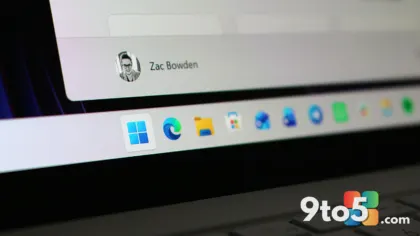
The app reportedly even extends to the Windows 11 desktop environment, which is notable because the desktop is not a game or a typical GPU-accelerated application. Applying DLSS 5 there suggests the tool works as an overlay or system-level rendering layer rather than a per-app hook.
Because this is an unofficial, community-made project, it does not carry Nvidia’s endorsement or quality assurance. You are relying on a third party’s code to intercept and modify how your GPU renders graphics, which is exactly why the limitations below matter so much.
How global DLSS 5 works under the hood
To understand why this is tricky, it helps to know how DLSS 5 normally functions. In officially supported titles, the game engine hands Nvidia specific data — the low-resolution internal render, motion vectors, and depth information — and the DLSS engine uses that to reconstruct a higher-resolution image. That partnership between the app and the driver is what makes the result clean.
An unofficial global tool cannot count on that cooperation. Rather than receiving first-party data from each application, it has to approximate or capture what it needs on the fly, typically by reading the final rendered frame and running it through Nvidia’s upscaling model. This is a fundamentally different approach, and it is the reason the results are not guaranteed to match native support.
From a technical standpoint, system-level overlays that inject rendering work are the same category of software that has existed for years for other purposes. They can be effective, but they also sit deep in your graphics stack, which introduces the potential for instability.
The limitations you should expect
Neowin notes that the app works on “almost any” Windows 11 app rather than everything, and that there are a few limitations. While the third-party developer has not published an exhaustive compatibility list, the nature of this kind of global rendering tool means you should anticipate the following:
- Not universal support: Some applications, especially those with unusual rendering paths or heavy anti-cheat software in games, may not work at all or could behave unexpectedly.
- Possible visual artifacts: Because the tool is approximating data that native DLSS 5 receives directly, you may see ghosting, tearing, or other artifacts in motion.
- Stability risks: Injecting a rendering layer system-wide can cause crashes or performance hiccups in apps that were never designed to cooperate.
- No official support: If something breaks, Nvidia and your app developers are unlikely to help, since this is not a sanctioned feature.
What this means for you
For the average user, the honest takeaway is caution. If a game or application officially supports DLSS 5, you should always use that native support first — it will be more stable and produce better images than any third-party workaround.
The global tool is most relevant to enthusiasts who want to experiment, or who have older or niche applications that simply will never receive official DLSS 5 support. Even then, you should treat it as a tinkering project rather than a daily-driver performance boost.
There is also a security dimension worth considering. Running unofficial software that intercepts your GPU’s rendering requires a high level of trust, since it operates at a level that can affect your entire system. Only download such tools from sources you genuinely trust, and be aware that antivirus software sometimes flags this kind of low-level injection tool.
How to get it
Since this is an unofficial project, you will not find it on the Microsoft Store or Nvidia’s official channels. The app is distributed by its third-party developer, so you will need to locate the official distribution page or repository provided by the creator and follow their installation instructions there.
Before installing anything, make sure your Nvidia drivers are up to date, since the tool relies on Nvidia’s DLSS 5 runtime to do the actual work. It is also wise to create a system restore point, given that the software modifies how your graphics stack behaves system-wide.
If you do decide to try it, start with a single non-critical application and see how it performs before applying it broadly. That way, if you encounter artifacts or crashes, you can isolate the problem without disrupting your whole system.
Bottom line: the concept of applying Nvidia DLSS 5 everywhere on Windows 11 is genuinely exciting, but an unofficial app is a workaround, not a replacement for native support. Use it to explore, but keep your expectations proportionate to the risks.
Source: Neowin
Over to you: Would you trust an unofficial app to run DLSS 5 system-wide, or stick strictly to native in-game support?