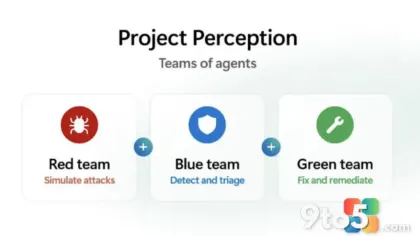
Microsoft is facing a security challenge that did not exist a year ago. Artificial intelligence models are now discovering Windows security flaws at a pace that outstrips the company’s ability to develop and deploy fixes. This shift has forced Redmond into a difficult triage strategy, raising questions about whether current patching cycles can keep pace with automated vulnerability research.
The situation has moved from theoretical to operational quickly. When AI systems can generate proof-of-concept exploits for kernel-level bugs in under half an hour, the traditional six-week Patch Tuesday rhythm looks dangerously slow. The implications extend far beyond consumer desktops, touching enterprise infrastructure, government networks, and the broader national security posture.
The Race Against AI-Discovered Windows Security Flaws
The catalyst for this accelerated timeline is Anthropic’s Mythos AI model, specifically engineered for cybersecurity research and biology. During early evaluations, Anthropic found that Mythos could identify and exploit Windows vulnerabilities with remarkable speed. According to reports from Axios, the model generated its first proof-of-concept exploit for a Windows kernel vulnerability within just 31 minutes of testing.
Anthropic’s findings highlighted a stark reality: AI coding capabilities have reached a threshold where automated systems can match or exceed human researchers in vulnerability discovery. The company noted that Mythos had already identified thousands of high-severity issues across every major operating system and web browser. Recognizing the potential for misuse, Anthropic launched Project Glasswing, a defensive initiative designed to put these capabilities to work for good.
Project Glasswing brings together major technology players, including Microsoft, Google, Amazon, Nvidia, and Apple. The goal is straightforward: find and patch holes before malicious actors can weaponize them. However, the open access to these models has created an unintended consequence. Security holes are being uncovered by a broad network of researchers and automated systems far faster than Microsoft’s engineering teams can validate, prioritize, and ship fixes.
Triage vs. Total Coverage
Faced with an overwhelming volume of discoveries, Microsoft has adopted a strict triage protocol. Internal records, obtained by ProPublica, indicate that the company is prioritizing only the most critical, high-severity bugs for immediate remediation. Plans exist to address moderate-severity flaws later, but low-severity issues are currently being deprioritized entirely.
This approach mirrors traditional security operations, but experts warn it may be fundamentally flawed in an AI-driven threat landscape. Vinh Nguyen, a former chief AI officer at the National Security Agency, told ProPublica that the old model underprices risk. He explained that attackers can now chain four low-level flaws together to achieve a high-severity outcome. If Microsoft continues to ignore lower-tier discoveries, it leaves the door open for sophisticated multi-stage attacks.
The scale of the problem is already visible in Microsoft’s release schedules. July’s Patch Tuesday fixed a record 622 bugs, the highest number in the company’s history. As AI discovery tools continue to improve, that number will likely climb. Engineering teams will need to scale their response capabilities significantly, or the gap between discovery and remediation will widen further.
Government Pressure and Contract Risks
Microsoft’s security posture is already under intense scrutiny from Washington. A major Sharepoint breach last year exposed tens of thousands of servers across government agencies, including the National Institutes of Health, the National Nuclear Security Administration, the Department of Homeland Security, and the Cybersecurity and Infrastructure Security Agency.
The incident prompted bipartisan action in Congress. Senators Eric Schmitt and Ron Wyden sent a letter to the Department of Defense, expressing serious concern about the government’s reliance on Microsoft products. They cited a pattern of cybersecurity lapses and requested that the DoD halt plans to increase its dependence on Microsoft software.
While no immediate contract changes resulted from the letter, the political pressure remains. If AI-accelerated vulnerability discovery leads to another large-scale breach, lawmakers could move quickly to restrict federal software procurement. Billions of dollars in government contracts could be at risk if Microsoft cannot demonstrate a reliable, rapid response to emerging threats.
What This Means for You
For everyday users and IT administrators, the core takeaway is that the security landscape has fundamentally changed. The window of exposure between a vulnerability being discovered and a patch being available is shrinking. Even if you keep Windows Update enabled, you may find yourself running unpatched systems for longer than before.
The reliance on triage means that not every flaw will be fixed immediately. While high-severity issues will still receive priority attention, the broader ecosystem of bugs will persist longer in the wild. This environment rewards proactive security habits over passive reliance on automatic updates.
What to Do Now
Stay current with Windows Update. Check for updates manually at least once a week to ensure you have the latest security patches. Enable automatic updates if you have not already done so, and configure them to install security updates without delay.
Layer your defenses. Relying solely on Windows Defender is no longer sufficient in this environment. Use multi-factor authentication everywhere possible, restrict administrative privileges, and consider endpoint detection and response tools for critical systems. Monitor official Microsoft security advisories for zero-day warnings, and have a plan to isolate affected machines quickly if a critical flaw is disclosed.
Source: Computerworld
Over to you: Are you relying solely on automatic updates, or have you added extra layers to your Windows security setup?
You may also like
 Microsoft Raises Windows 11 License Price Significantly More Than Expected
 Microsoft’s MAI-Image-2.6 Claims #2 Spot on AI Image Generation Leaderboard
 Windows 10 Refuses to Die: Lansweeper, HP, and Microsoft Confirm the Hard Truth
 Microsoft Edge Testing Apple Account Sign-In: No Microsoft Account Required