Microsoft has officially entered the arena of specialized cybersecurity artificial intelligence, announcing two significant developments: its first in-house security AI model, MAI-Cyber-1-Flash, and a new agentic security system known as Project Perception. The company claims these tools set a new standard for defending against AI-powered threats, explicitly positioning them as superior to Anthropic’s recently released Mythos 5 model.
This move marks a strategic shift for the tech giant, moving away from relying solely on third-party AI providers for its security infrastructure. By developing MAI-Cyber-1-Flash internally, Microsoft aims to integrate advanced threat detection directly into its existing ecosystem, including Microsoft Defender and Azure Sentinel. The announcement comes at a critical time as cybercriminals increasingly leverage large language models to craft sophisticated phishing campaigns and automated malware.
According to Microsoft, MAI-Cyber-1-Flash is optimized for speed and accuracy in identifying malicious code and network anomalies. The model is designed to operate in real-time, allowing security operations centers to respond to incidents faster than ever before. This focus on “flash” capabilities suggests an emphasis on low-latency inference, which is crucial for blocking attacks before they can cause significant damage.
Project Perception: Agentic AI for Security
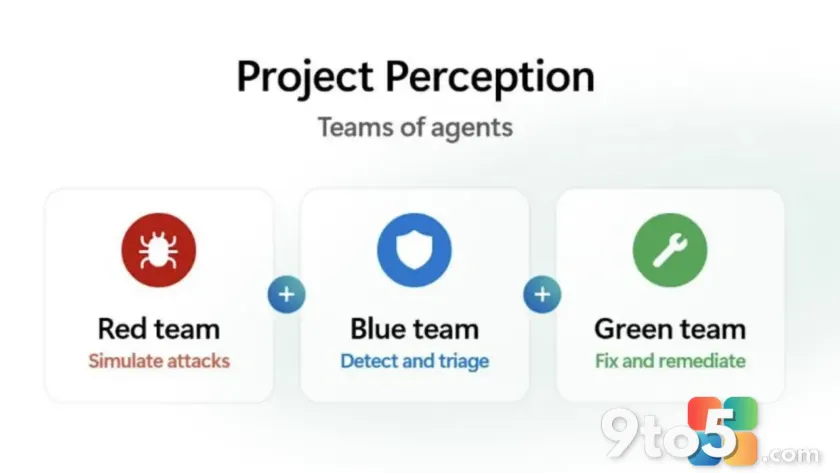
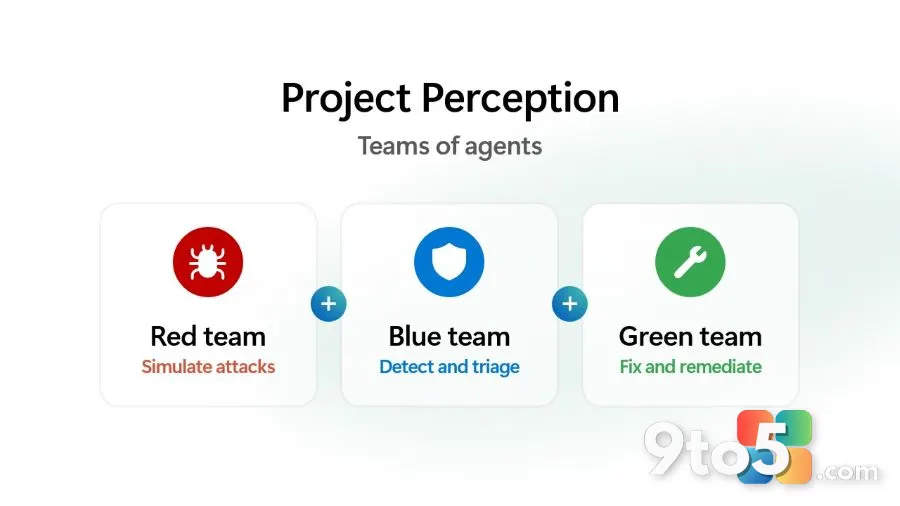
Alongside the new model, Microsoft revealed Project Perception, an agentic AI system designed to autonomously monitor and respond to security threats. Unlike traditional tools that require human analysts to triage alerts, Project Perception utilizes autonomous agents to investigate incidents, correlate data across multiple sources, and even initiate remediation steps without human intervention.
This agentic approach represents a significant evolution in cybersecurity operations. By delegating routine investigation tasks to AI agents, security teams can focus their efforts on complex, high-stakes incidents that require human judgment. Microsoft states that Project Perception can reduce the time to contain threats by a substantial margin, addressing the growing shortage of skilled cybersecurity professionals worldwide.
The system is built to learn from past incidents, continuously improving its detection and response capabilities over time. This adaptive nature is essential in a landscape where attack vectors are constantly changing. Microsoft emphasizes that human oversight remains a core component, with Project Perception designed to augment rather than replace the work of security analysts.
Challenging Anthropic’s Mythos 5
In a direct challenge to competitors, Microsoft claims that MAI-Cyber-1-Flash outperforms Anthropic’s Mythos 5 model in specific cybersecurity benchmarks. While Anthropic has made strides in developing AI for safety and security, Microsoft’s entry into this space with a dedicated model signals its commitment to maintaining dominance in the cloud and security markets.
The comparison highlights the intensifying competition among tech giants to provide the most robust AI-driven security solutions. Microsoft’s claim suggests that its proprietary data and integration with its own security products give it an edge in practical applications. This competitive dynamic is likely to drive further innovation in the field, benefiting enterprises and consumers alike.
Industry observers note that the effectiveness of these models will ultimately be measured by their performance in real-world scenarios. As AI continues to be weaponized by threat actors, the development of equally advanced defensive AI tools becomes a necessity rather than a luxury. Microsoft’s announcement underscores the growing importance of AI in the ongoing battle for digital security.
What This Means for You
For enterprise customers, these announcements suggest that Microsoft will soon offer more integrated and powerful security options within its existing platforms. Users of Microsoft Defender and Azure Sentinel may see enhanced capabilities in the near future, potentially reducing the need for additional third-party security tools.
Individual users may also benefit indirectly, as the overall security posture of the Windows ecosystem improves. However, the primary rollout of these advanced AI features is expected to target business and enterprise clients first, given the complexity and scale required for agentic systems like Project Perception.
How to Get It
Microsoft has not yet disclosed specific availability dates for MAI-Cyber-1-Flash and Project Perception. Interested parties should monitor official Microsoft security blogs and announcements for updates on beta access or general availability. Enterprise customers may want to engage with their Microsoft account representatives to discuss potential early adoption opportunities.
Source: Neowin
Over to you: Do you think Microsoft’s in-house AI model will give them a significant edge over competitors like Anthropic in the cybersecurity space?
You may also like
 70+ Fake Windows App Websites Are Distributing Malware via Google Search
 I Ditched Microsoft Editor for Copilot and Gemini After a Month of Testing
 Microsoft Unveils Project Perception, a New AI-Powered Cyber Stack for the Agentic Age
 Xbox Owners Now Get Free PC Copies of Select Ubisoft Games via Ubisoft Connect PC