Former Microsoft executive Steven Sinofsky recently shared a revealing look into the company’s past, explaining that Microsoft Office rebranding every 24 to 36 months was never about fresh design aesthetics. Speaking on his Hardcore Software newsletter and via X, Sinofsky clarified that the relentless cycle of new icons, logotypes, and name changes was a calculated business strategy rooted in retail sales mechanics and the complexities of enterprise volume licensing.
Sinofsky, who spent 23 years at Microsoft and ran the Office product division before taking the helm at Windows, noted that the cadence of updates was deliberately tied to how software was sold in an era long before subscriptions dominated. His comments came in response to a post by former Instagram designer Frank Bach, who discussed finally freeing the app’s header logo from internal constraints. Sinofsky used the moment to highlight how Microsoft once treated branding as a primary sales lever rather than a cosmetic update.
The “Model Year” Strategy and Office 94

According to Sinofsky, the year-based naming convention for Office products was borrowed directly from the automotive industry. Car manufacturers use “model years” to make last year’s vehicle feel instantly outdated, even if the mechanical changes are minimal. Microsoft leadership wanted to establish a similar annuity relationship with customers, pushing the idea that your copy of Office was aging regardless of functional improvements.
This strategy was most visible during the development of Office 94 and Office 96. Sinofsky revealed that Microsoft planned two major releases roughly 12 months apart, initially timed around the launch of Windows 95, then codenamed “Chicago.” Office 94 was intended to sync with the operating system’s debut, while Office 96 would follow a year later to maintain the perceived freshness of the product line.
However, Sinofsky described Office 94 as a “strategy tax.” The release was less about delivering a polished product and more about proving that Office could function as an independent product organization rather than just a Windows accessory. He noted that only about 15 percent of engineering resources were dedicated to Office 94, with the remaining 85 percent focused on Office 96. This internal split allowed Microsoft to market two different narratives simultaneously: one emphasizing the Windows team’s efforts for Chicago, and another highlighting the massive investment in Office 96 for the applications division.
Retail Was the Primary Driver
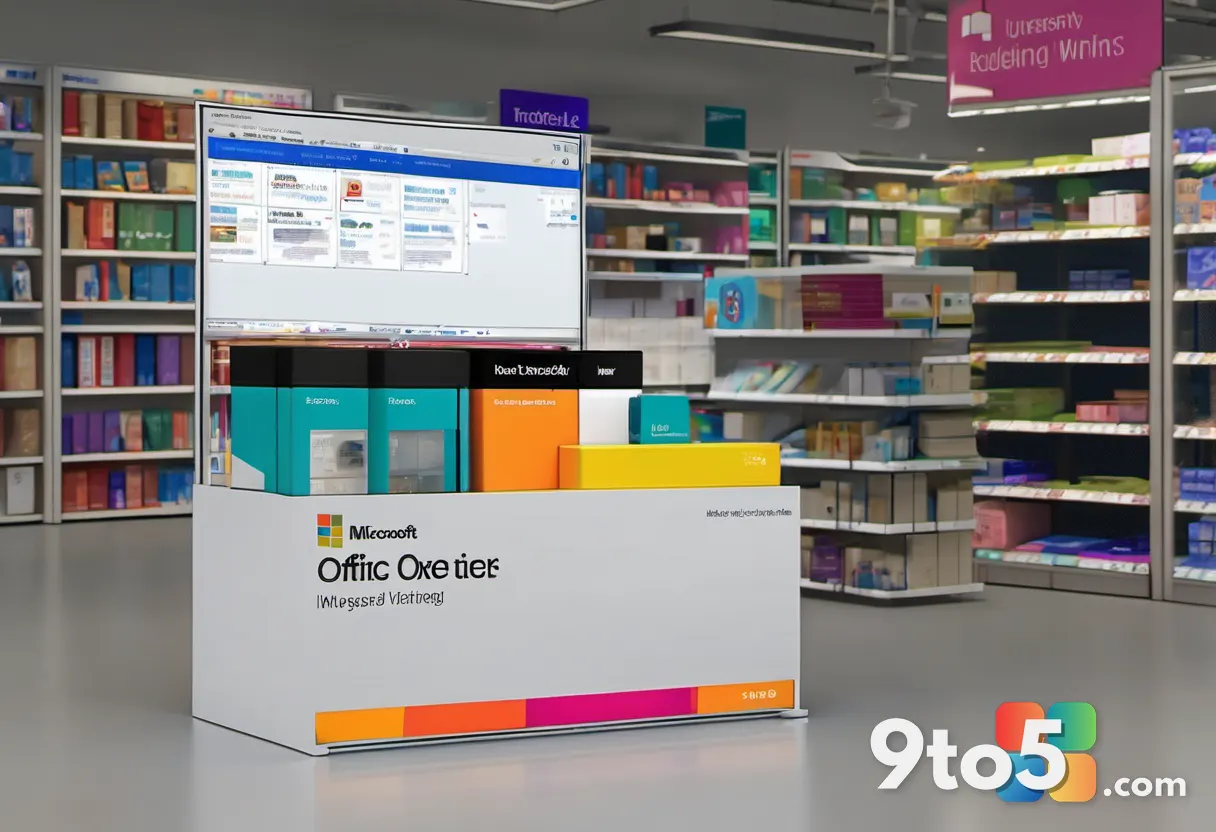
Until approximately 2000, the main catalyst for Microsoft Office rebranding was the retail environment. During this period, software was a physical product. Consumers walked into stores, scanned shelves for familiar logos, and made purchasing decisions based on what looked new and improved. A new icon and a distinct name were essential tools for point-of-sale marketing.
Sinofsky explained that without a visible change, there was little justification for a customer to pay full price for an upgrade. The branding served as a promise of novelty, encouraging users to believe the new version offered something worth buying. This approach was particularly effective in a market where competition was fierce, and shelf presence was everything. The packaging, magazine ads, and in-store displays all relied on the latest branding to capture attention.
Office 4.x marked the final version-numbered release before Microsoft fully committed to year-based names. This shift was not just cosmetic; it was a psychological tool designed to create a sense of urgency. Even if the underlying features remained largely unchanged, the new name and logo signaled that the product had evolved, making it harder for customers to justify sticking with an older version.
Enterprise Contracts Made the Cycle Messier

While retail was the straightforward part of the equation, the enterprise sector introduced significant complications. Large corporate customers typically signed three-year agreements that granted them the right to deploy whatever version of Office was released during that term. This created a dynamic where companies felt compelled to deploy the latest release to maximize the value of their contracts.
However, deploying a new version across an entire organization was a costly and time-consuming endeavor. Businesses were often reluctant to retrain thousands of employees on a slightly different interface every year. Sinofsky noted that Microsoft needed to strike a balance: making Office look new enough to satisfy enterprise customers, but not so frequently that deployment became a logistical nightmare.
This tension led to interesting technical compromises. For instance, Office 94 retained the same .DOC and .XLS file formats as its predecessor. This decision was partly due to time constraints, but also because maintaining shared formats created a form of lock-in. When everyone relied on the same file standards, upgrading became less of a personal choice and more of a collective necessity. The fear of incompatibility drove many organizations to adopt new versions, even if the functional benefits were questionable.
The Subscription Model Changed Everything

Today, the Microsoft 365 subscription model has effectively dismantled the 24-month rebranding cycle. Instead of waiting for a major release, subscribers receive continuous updates to features and security, with no separate box or new icon to generate excitement. The concept of a “new version” has become largely obsolete, as the software is constantly evolving in the background.
Despite this shift, Microsoft has not entirely abandoned the urge to rename its products. The Microsoft 365 app underwent several iterations, moving from Office to Office 365, then to Microsoft 365, and most recently to Microsoft 365 Copilot. This recent rename was driven by the integration of AI capabilities, signaling a new era where Copilot is positioned as a central feature across the suite.
Sinofsky’s insights highlight a fundamental transition in how software is marketed and distributed. In the past, branding was a critical tool for driving sales in a physical retail world. Now, with subscriptions and cloud-based delivery, the focus has shifted to continuous value delivery and ecosystem integration. The relentless cycle of rebranding was a product of its time, designed to navigate the challenges of retail and enterprise sales in an era before the subscription model took over.
What This Means for You
For everyday users, understanding this history provides context for Microsoft’s current product strategy. The days of eagerly awaiting a new Office release for a fresh look are gone, replaced by a model focused on steady improvement and new features. While some may miss the clarity of distinct versions, the subscription approach offers greater flexibility and access to the latest tools without the need for costly upgrades.
As Microsoft continues to integrate AI and cloud services, the emphasis will likely remain on functionality and connectivity rather than cosmetic changes. The era of rebranding for the sake of rebranding appears to be behind us, giving way to a more substantive approach to product development.
Source: Windows Latest
Over to you: Did you ever feel pressured to upgrade Office just because of the new box on the shelf?