Microsoft is significantly expanding its Azure infrastructure portfolio by integrating AMD’s latest Helios AI platform and next-generation EPYC datacenter processors. This move introduces three new virtual machine families designed to address the escalating demands of modern AI training, large-scale data processing, and semiconductor design. The announcement underscores a broader strategy to offer customers a heterogeneous, open platform that balances performance, cost, and energy efficiency across diverse workloads.
HDv2 VMs: Purpose-built for AI data systems
At the heart of modern AI systems lies a critical dependency on high-density, power-efficient CPU compute. Accelerators require robust data pipelines to function, yet traditional infrastructure often struggles to keep pace with the volume of data needed for training jobs and agentic workflows. Microsoft’s new HDv2 virtual machines are engineered specifically to eliminate these bottlenecks.
Co-designed with AMD, HDv2 VMs expand Azure’s capabilities for the most demanding CPU workloads. These instances are built to handle data preparation, search indexing, reinforcement learning, and agent coordination at scale. Each VM features nearly 500 physical 6th Generation AMD EPYC CPU cores, 4 terabytes of RAM, 32 terabytes of local NVMe storage, and 400 Gb Azure Boost networking. This configuration is tailored for customers who need to process massive datasets without compromising on throughput or latency.
HXv2 VMs: Optimized for silicon design and HPC
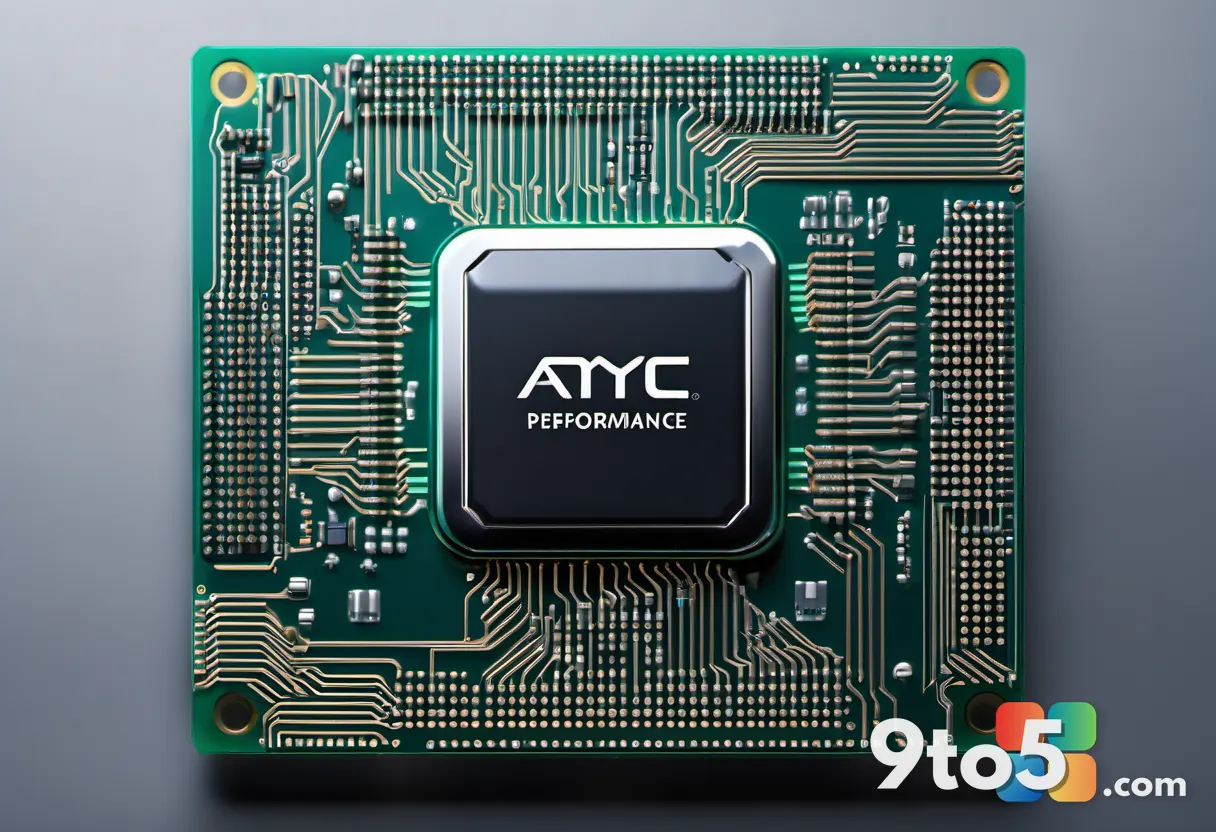
The AI era has created an unprecedented demand for advanced silicon, driving firms to push the boundaries of chip design. Azure HX virtual machines, originally launched in 2023 in partnership with AMD, have become a staple for electronic design automation (EDA) workloads. The new HXv2 generation builds on this foundation, offering substantial upgrades for engineers developing next-generation AI hardware.
HXv2 VMs continue to leverage AMD’s unique 3D V-cache technology, which provides 50% more addressable cache per core compared to previous generations. Each instance packs 176 AMD 6th Generation EPYC CPU cores clocked at over 5 GHz, alongside VM sizes offering nearly 2 or 4 terabytes of RAM. These specifications are critical for RTL simulation workloads, where single-threaded performance and memory bandwidth directly impact design cycle times.
Beyond chip design, HXv2 is positioned to support a wider array of technical computing tasks, including scientific simulation and engineering analysis. The inclusion of 800 Gb InfiniBand networking enables large-scale MPI-based simulations, making these VMs suitable for a broad spectrum of high-performance computing (HPC) customers. AMD itself cited the platform as essential for scaling complex EDA workloads while designing future EPYC CPUs and Instinct GPUs.
ND MI455X v7: Production-scale AI inference
For organizations running large-scale AI inference, Microsoft is introducing the ND MI455X v7 virtual machine. Powered by the AMD Helios rackscale solution, this offering is designed to handle reasoning, search, and agentic workloads that underpin modern AI services. The Helios architecture allows for efficient scaling of inference workloads, delivering strong performance and energy efficiency for demanding AI applications.
This new VM family expands Azure’s infrastructure options, giving customers the flexibility to choose the right compute resources for specific AI workflows. Whether the task involves data systems, chip design, or production-scale inference, the expanded portfolio aims to provide optimized solutions that align with Microsoft’s commitment to customer choice and heterogeneous computing.
What this means for you
For IT professionals and cloud architects, these announcements signal a continued shift toward specialized infrastructure. The HDv2 and HXv2 VMs offer tangible improvements in core counts, memory, and networking that can directly impact workload performance. Organizations running EDA tools or processing large datasets may find significant benefits in migrating to these newer instances. Meanwhile, AI teams looking to deploy inference models can leverage the ND MI455X v7 for its efficiency and scalability.
How to get it
The new HDv2, HXv2, and ND MI455X v7 virtual machines will be available on Azure in the coming months. Customers interested in these offerings can monitor the Azure official blog and documentation for detailed pricing, availability, and migration guides. Those already using AMD-based Azure instances may find these new generations provide a compelling upgrade path for performance-critical workloads.
Source: The Official Microsoft Blog
Over to you: Are you planning to migrate your EDA or AI workloads to the new AMD-powered Azure VMs, or will you stick with your current infrastructure for now?
You may also like
 Linus Torvalds Defends AI in Linux Kernel as Microsoft’s AI-Code Strategy Pays Off
 Gears of War: E-Day partners exclusively with NVIDIA for PC graphics
 New Outlook warns against replying to old emails, adds faster categorization
 Microsoft retains #2 spot in Interbrand’s Best Global Brands despite Xbox layoffs