Active Threat Status
- Status: Confirmed / Actively Exploited
- Affected Platform: Windows 11
- Patch Availability: None (Zero-Day)
- Severity: Critical
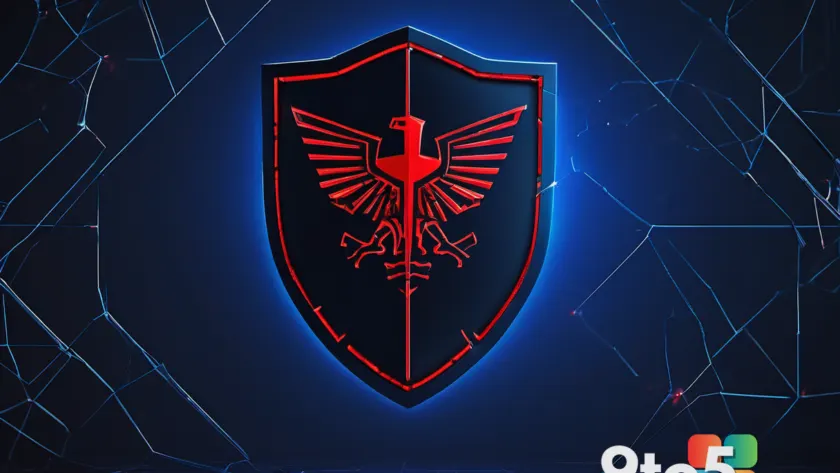
A critical security vulnerability affecting Windows 11 is currently under active exploitation, leaving administrators and users without an official mitigation from Microsoft. According to reporting from Neowin, the threat is identified as the NightmareEclipse exploit, which features a proof-of-concept module referred to as ShieldBreak. Because this is a zero-day issue, the vulnerability remains unpatched, and the attack surface is widening with each passing day.
Understanding the ShieldBreak Proof of Concept
The disclosure highlights a proof-of-concept (PoC) implementation named ShieldBreak. In security research, a PoC demonstrates that a vulnerability is viable and can be triggered reliably, but it does not necessarily represent a fully weaponized, stealthy malware payload. The naming convention ShieldBreak strongly implies that the exploit bypasses a specific defensive mechanism within the Windows kernel or a protected subsystem, effectively neutralizing a security boundary that users and enterprises rely on.
When researchers publish a PoC for a zero-day, it serves a dual purpose. It validates the existence of the flaw for defenders to monitor, but it also provides threat actors with a blueprint to develop functional weaponization code. The fact that this specific NightmareEclipse variant is already being exploited means attackers have moved past the research phase and are deploying working payloads against unpatched systems.
Why This Zero-Day Matters for Windows 11
Windows 11 was designed with a modernized security architecture, including features like Kernel Patch Protection, Virtualization-Based Security (VBS), and Credential Guard. An exploit that successfully breaches these layers indicates a deep-level compromise, likely at the kernel or driver level. If the NightmareEclipse exploit achieves privilege escalation, it grants attackers near-total control over the affected machine, enabling data exfiltration, persistence installation, and lateral movement across networks.
The reference to strikes again in the source reporting suggests this is not the first iteration of this threat family. Previous versions of the NightmareEclipse campaign likely targeted older Windows builds or different attack vectors. The evolution of this exploit indicates that the underlying vulnerability has persisted across multiple Windows 11 iterations, or that the attackers have adapted their techniques to bypass newer mitigations.

Immediate Steps for Users and Admins
Until Microsoft releases an out-of-band security update, defense relies heavily on proactive monitoring and strict access controls. Enterprise administrators should immediately audit system logs for anomalous kernel-level activity, unexpected driver loads, or unauthorized privilege changes. Endpoint Detection and Response (EDR) solutions should be tuned to flag behaviors associated with known exploit kits that target similar Windows subsystems.
For individual users, the most effective immediate countermeasure is to restrict network exposure. Disable unnecessary remote access services, ensure that Windows Defender is actively monitoring all drives, and avoid downloading or executing unverified software. If you are running a highly sensitive workload, consider isolating it within a virtual machine with strict network segmentation until a patch is available.
What to Expect from Microsoft
Microsoft typically responds to confirmed zero-days being exploited in the wild by prioritizing an out-of-band patch. However, the development, testing, and certification process for kernel-level fixes can take several days to weeks depending on the complexity of the vulnerability. During this window, the company usually provides detailed technical guidance to enterprise customers through the Security Response Center.
IT professionals should monitor the Microsoft Security Response Center (MSRC) and the Windows Insider Blog for official advisories. Once a patch is released, it will likely be distributed via Windows Update for general users, while enterprise environments may receive it through WSUS or Microsoft Endpoint Configuration Manager (MECM). Applying the update immediately upon availability is critical to closing the attack window.
What This Means for You
The active exploitation of the NightmareEclipse exploit underscores the reality that modern operating systems are constant targets for sophisticated threat actors. Even with Windows 11’s hardened default configuration, a zero-day vulnerability can temporarily nullify those protections. Your immediate priority should be situational awareness: verify that your system is fully updated, enable all available security features, and maintain strict software hygiene. Do not wait for a mandatory reboot notification to address pending updates; schedule maintenance windows proactively to ensure you are protected the moment Microsoft closes this gap.
Source: Neowin
Over to you: Are you relying on Windows Update to push the fix automatically, or will you be monitoring the MSRC for an immediate out-of-band patch?