On this day, exactly 30 years ago, Microsoft shipped Windows NT 4.0 to business users. The release landed on August 29, 1996, according to Microsoft’s product history, and it quietly became one of the most long-lived operating systems the company ever made.
For a whole generation of IT administrators, NT 4.0 was the workhorse that kept offices running. For the wider public, it was the professional-grade sibling of the consumer Windows 95 that had taken the world by storm just twelve months earlier.
The Windows NT 4.0 desktop you still recognize today
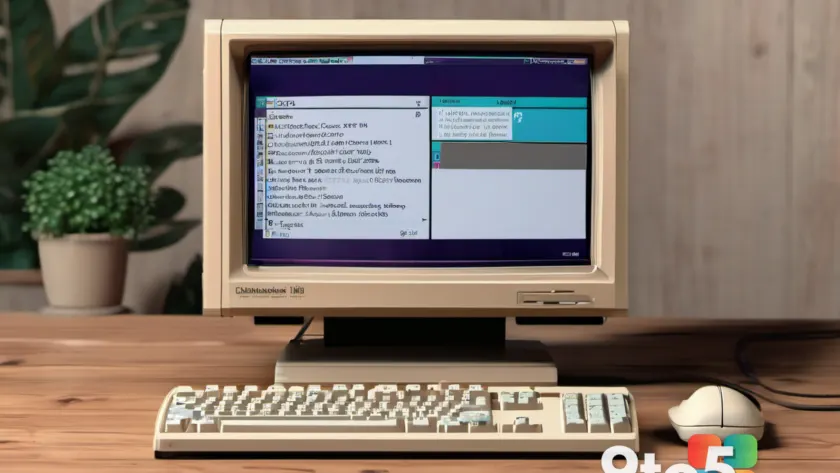
The most obvious thing about NT 4.0 was what it looked like. Earlier NT releases — NT 3.1 in 1992 and NT 3.51 in 1995 — still used the older Program Manager interface, with its grid of tiled icon windows that predated the modern desktop. NT 4.0 replaced all of that with the shell people had grown to love from Windows 95: the Start menu, a taskbar along the bottom of the screen, and desktop icons handled by a new Explorer-style file manager.
That was a deliberate move. Microsoft had spent the mid-1990s learning exactly what everyday users found intuitive, and NT 4.0 imported those conventions straight onto a far more robust foundation. The result was an OS that felt familiar to consumers while still behaving like serious business software.
What made NT different from Windows 95
Here is the part that trips people up. NT 4.0 and Windows 95 shared the same look, but they were built on completely different cores. Windows 95 ran on a consumer-oriented, MS-DOS-based architecture that prioritized hardware compatibility and cost. NT 4.0 ran on Microsoft’s dedicated NT kernel, a 32-bit design built from the ground up for multitasking, memory protection, and security.
In practice, that meant NT 4.0 could handle multiple users, enforce permissions, and stay up for long stretches without the crashes and instability that plagued the consumer line. It also supported networking features and directory services that would later mature into Active Directory. If Windows 95 was the friendly all-rounder, NT 4.0 was the disciplined professional.
Server, workstation, and the RISC days
NT 4.0 shipped in several editions to cover different jobs. There was NT 4.0 Workstation for individual professionals, NT 4.0 Server for file and print duties, and the Option Pack bundle, which added web and messaging tools like IIS and Exchange support. A Terminal Server Edition arrived a bit later, in 1998, letting multiple users run sessions off a single machine — an early step toward the remote-desktop model many organizations rely on today.
NT 4.0 was also notable for its reach beyond the usual Intel chips. It ran on RISC architectures including DEC Alpha, MIPS, and PowerPC, giving companies options for specialized high-performance hardware. It would turn out to be the last version of NT to support those architectures; the next release, Windows 2000, narrowed focus to x86 and later 64-bit platforms.

A legacy that outlived its name
NT 4.0 did not disappear quickly. Microsoft kept shipping service packs — running the gamut from SP1 all the way to SP6a — to patch holes and add stability over several years. Its successor, Windows 2000, was essentially NT 5.0, and it carried the NT naming lineage forward into Windows XP (NT 5.1) in 2001.
The line continued to evolve for decades, but the original NT 4.0 reached the end of its supported life on January 8, 2004, when Microsoft ended extended support. Even so, its design philosophy — a stable, secure, directory-aware kernel — became the default expectation for every business Windows that followed.
What this means for you
The practical takeaway is that the Windows you use today inherited a lot from NT 4.0. The Start menu and taskbar, the Explorer file manager, the emphasis on stability over flashy features — these all trace back to the moment Microsoft decided to put a consumer-friendly face on its professional-grade kernel.
For anyone still dealing with legacy systems, the anniversary is a useful reminder: anything built on that early NT line is well past end-of-life and should not be connected to modern networks. And for casual users, it is a good moment to appreciate how a 1996 business release quietly shaped the desktop experience you take for granted.
Source: Neowin
Over to you: If you worked with Windows NT 4.0 back in the day, what was the one thing you loved — or hated — about it?