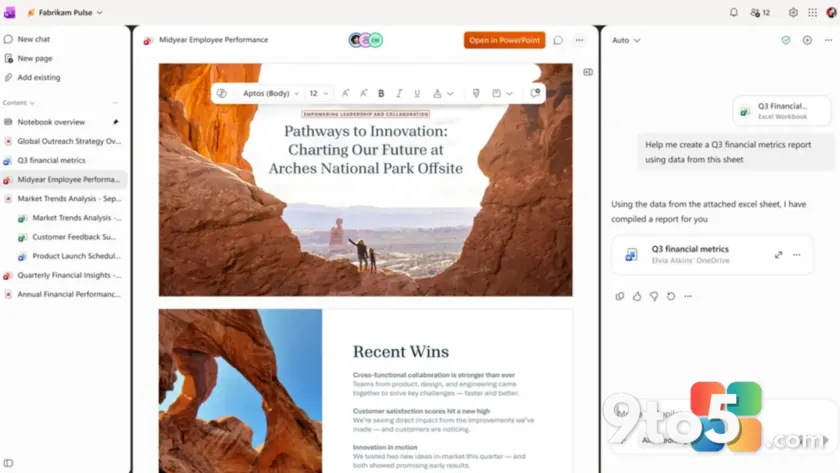
Microsoft is giving Copilot Notebooks a significant upgrade, adding productivity and automation capabilities that push the feature well beyond its origins as a research assistant. The move signals a direct challenge to Google’s NotebookLM, one of the most popular AI research tools of recent years.
What’s changing in Copilot Notebooks
According to the report, Microsoft is expanding the feature with “significant productivity and automation improvements.” The emphasis on automation suggests the update is designed to help users do more with less manual effort when building and managing their documents.
The key strategic shift, as described, is helping Copilot Notebooks “move beyond research assistance.” For now, the public details remain fairly high-level, but the direction is clear: Microsoft wants the feature to function as a working tool for getting things done, not merely a place to summarize sources.
It’s worth noting that Microsoft hasn’t released an exhaustive feature list in the reporting available so far, so the exact scope of these upgrades remains partially unclear. What is confirmed is the intent to make the workspace more action-oriented and automated, leaning into tasks rather than just analysis.
Why Microsoft is targeting Google’s NotebookLM
Google’s NotebookLM, launched in 2024, quickly became a fan favorite for a simple reason: it lets you upload your own documents and sources, then answers questions and generates summaries grounded in that material. Its Audio Overview feature, which turns content into a podcast-style conversation, went viral and drew millions of users.
By explicitly positioning Copilot Notebooks against NotebookLM, Microsoft is signaling that it wants to capture a slice of that research-and-knowledge workflow — but with its own twist of automation and productivity features layered on top.
This fits into Microsoft’s broader Copilot strategy of embedding AI across its productivity suite, from Word and Excel to Teams. The company has consistently framed Copilot as a way to reduce busywork, and these Notebooks upgrades appear to be a continuation of that approach, aiming to make the tool a hub for actual output rather than just input.
What this means for you
If you currently use Copilot Notebooks for research, document summarization, or team collaboration, these upgrades could make the feature meaningfully more useful. The push toward automation, in particular, could save time on repetitive tasks like drafting, formatting, or pulling insights from multiple sources at once.
For users weighing their options between Microsoft’s and Google’s tools, the competition is healthy. When two major players race to build better AI research assistants, everyday users typically win with more features, tighter integration, and less friction between tools.
That said, until Microsoft shares the full details of the update, it’s hard to say exactly how much your workflow will change. If you’re considering switching tools specifically for AI research, you may want to watch for the fuller feature announcement before committing.
How to get it
Copilot Notebooks is available to users through Microsoft 365 and the Copilot ecosystem. As with most Microsoft feature rollouts, these updates typically arrive gradually, so you may not see them all at once depending on your account, plan, and region.
To check for the latest changes, keep Copilot Notebooks updated and sign in with your Microsoft account. If you don’t already use it, you can access it through your Microsoft 365 apps or the standalone Copilot interface.
For now, the best move is to keep an eye on official Microsoft channels for the complete rundown of new capabilities, since the initial reporting focuses on the direction of the update rather than every individual feature.
Source: Neowin
Over to you: Are you sticking with Google’s NotebookLM for research, or will you give the upgraded Copilot Notebooks a try?
You may also like
 Microsoft’s New Copilot App Now Ships Full Word, Excel, and PowerPoint
 Microsoft Confirms Its Upcoming Edge AI Feature Collects Data — But Says It’s Not for Spying
 12 steps to lock down your Google account security (and why a password alone is nowhere near enough)
 New Dawn of War IV gameplay trailer puts Space Marines into battle