- Status: Peer-reviewed critique published in Nature
- Affected Technology: Microsoft Majorana 1 and Majorana 2 quantum chips, Topological Gap Protocol (TGP)
- Key Issue: Alleged flaws in data analysis methods used to claim evidence of Majorana zero modes
A new peer-reviewed paper published in Nature is challenging Microsoft’s recent claims about its progress in quantum computing. Dr. Henry Legg from the University of St Andrews argues that Microsoft may have misinterpreted experimental data from its Majorana chip program, specifically regarding the Topological Gap Protocol (TGP) used to infer the existence of quantum states.
The critique of the Topological Gap Protocol
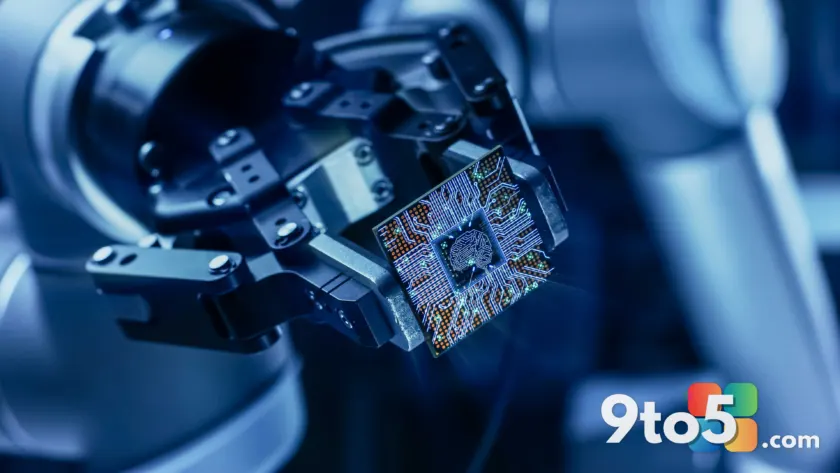
Microsoft has built its two-decade quantum strategy around creating Majorana ‘zero modes,’ theoretical subatomic particles that could resist errors common in traditional qubit designs. Last year, Microsoft claimed to have created a “transistor for the quantum age” with the Majorana 1 chip, followed by the launch of the Majorana 2 chip earlier this month.
Dr. Legg’s paper suggests that the TGP framework, which Microsoft uses to analyze data and claim evidence of these particles, is fundamentally flawed. He describes the mechanism behind Microsoft’s claims as a “chaotic jumble of mismatched parts” rather than the precision instrument the company described. According to Legg, the noise observed in the data could be explained by other effects, and the specific data chosen for analysis may have skewed the results.
A history of skepticism
This is not the first time Microsoft’s quantum claims have faced scrutiny. In 2018, Microsoft announced it had detected evidence of Majorana fermions, only to retract the claim after independent researchers challenged the data. Nature editors later noted that those initial results did not represent evidence for the presence of Majorana zero modes.
Despite that setback, Microsoft persisted. The company recently announced that AI-assisted development led to a 1,000-fold improvement in reliability with the Majorana 2 chip. Based on this progress, Microsoft stated it now expects to achieve a scalable quantum computer by 2029, cutting its original timeline in half. Legg’s new critique aims to formalize the skepticism that many scientists in the field have held since the initial announcements.
Microsoft stands by its roadmap
Microsoft has responded firmly to the criticism. Dr. Chetan Nayak, technical fellow and vice president of quantum hardware at Microsoft, stated via email that the company remains confident in its results and roadmap. He emphasized that success is defined by delivering a scalable quantum computer, which they believe they are on track to do.
Microsoft noted that it has engaged in dialogue with academics and that its thorough rebuttal to similar criticisms was accepted and published by Nature. The company also highlighted its collaboration with DARPA under the Underexplored Systems for Utility-Scale Quantum Computing (US2QC) program as evidence of continued progress.
What this means for you
For most Windows users, this debate remains far removed from daily computing. Quantum computers are not consumer devices and are unlikely to replace traditional PCs anytime soon. However, Microsoft’s quantum efforts are tied to its broader cloud and AI strategies. If the Majorana chips fail to deliver on their promises, it could impact Microsoft’s ability to offer advanced quantum computing services through Azure in the future. For now, the timeline for a scalable quantum computer remains uncertain, with significant scientific debate still ongoing.
Source: Computerworld
Over to you: Do you think Microsoft’s aggressive 2029 timeline for scalable quantum computing is realistic, or is it too optimistic given the scientific skepticism?