After roughly five years of development and lab demos, Google Beam—the software at the heart of Google’s Project Starline 3D videoconferencing platform—is now generally available for purchase. As of Wednesday, the technology ships inside HP’s Dimension video meeting hardware, marking the first time the so-called ‘magic window’ can actually be bought rather than just watched in a demo.
Here’s what changed, who it’s aimed at, and what it means for everyday users.
What Google Beam actually is
Google began working on the underlying technology several years before it was first unveiled during the COVID-19 pandemic, when offices were shuttering and remote work became the norm. The system combines AI-generated 3D images of meeting participants with spatial audio to create the impression that everyone is sharing the same physical room.
Unlike immersive VR headsets, Beam doesn’t require any wearables. That distinction matters to analysts watching the space.
‘Beam offers the potential for immersive, 3D engagement, without the challenge of wearables,’ said Irwin Lazar, principal analyst at Metrigy.
The result, according to those who’ve used it, is surprisingly natural. Avi Greengart, president and founder of Techsponential, called it a ‘you have to try it’ experience.
‘It really does feel like you’re talking to someone a half a world away, with all your micro-expressions and nonverbal cues intact.‘ Greengart said. ‘This doesn’t just save you travel time and budget, it enables closer collaboration throughout a project or working relationship that provides different value than occasional live visits, which you may still need.’
The hardware behind Beam
The original Starline setup was a large video booth you stepped into. Google and HP have since shrunk that footprint into a smaller system that looks more like a conventional videoconferencing pod.
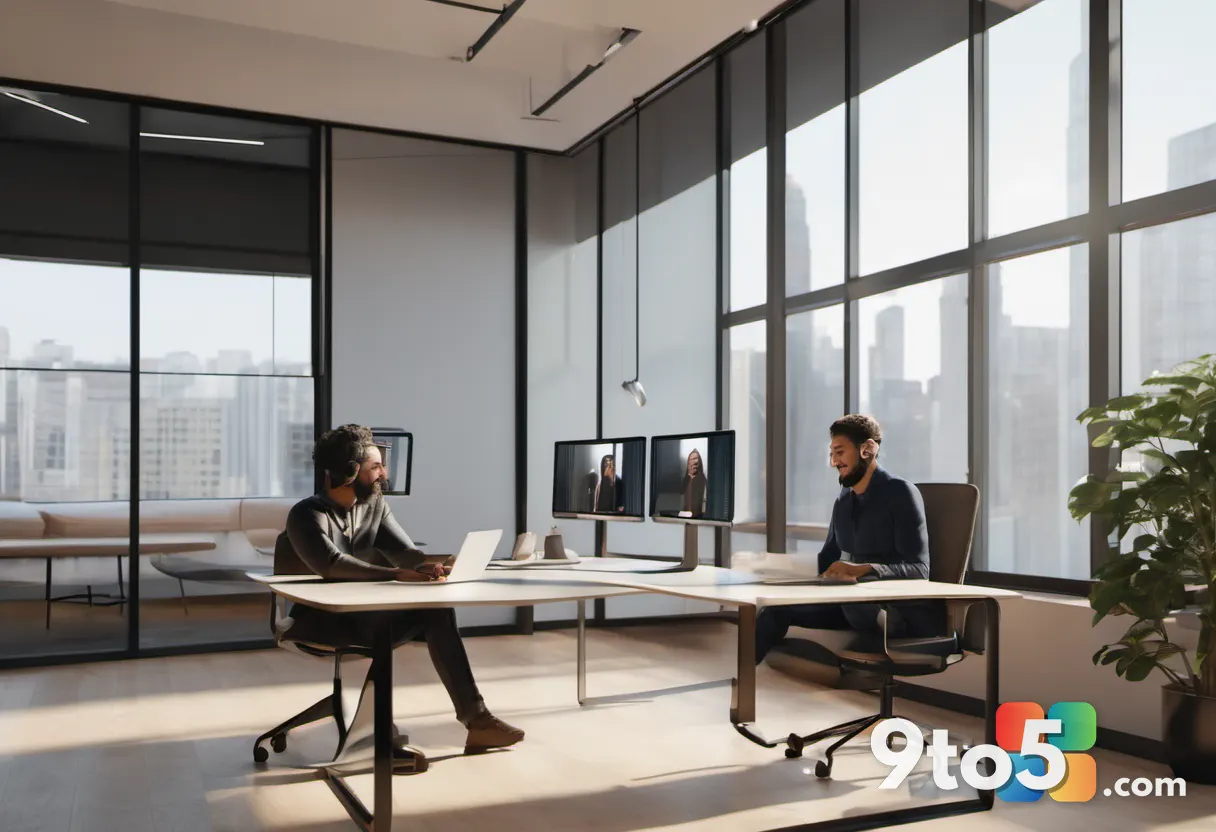
The centerpiece is HP’s Dimension, anchored by a 65-inch display that renders meeting participants in full size. The unit bundles everything Beam needs: the cameras, a 12-microphone array, and LED lighting. It works with both Google Meet and Zoom.
There’s a notable price tag attached. The Dimension hardware reportedly costs around $25,000 per unit. Google did not provide cost details for the hardware or for any additional software licenses tied to Beam.
Where you can get it
On launch, Google Beam will be sold in six countries: Canada, France, Germany, Japan, the UK, and the US.
For anyone who wants to see it before committing, Google has partnered with co-working space provider Industrious to make Beam available to try at its US locations, including Atlanta, Chicago, New York City, and Palo Alto.
Real-world use cases
Google says an internal study found that 50% of its own staffers who used Beam felt more connected to colleagues, which translated into a 21% drop in the need for follow-up meetings.
Select customers were given early access last year, ahead of today’s full launch. Management consulting firm Bain, for instance, uses Beam to interview job candidates remotely. The company says the setup helps interviewers read body language and eye contact without flying candidates in—and the associated travel savings.
Beam currently supports only one-to-one meetings. Google has highlighted ongoing work to enable group calls, but that feature remains at an experimental stage.
What this means for you
For most readers, Beam won’t be a desktop upgrade any time soon. The roughly $25,000 price point, plus the requirement that both parties use the system, keeps it firmly in enterprise and high-stakes territory.
Lazar expects early adopters to target specific scenarios: executive meetings, hiring interviews, product demos, and other high-stakes engagements.
Greengart described Beam as a ‘network-effect system,’ since it must be present on both ends of a call. That makes broad availability essential.
‘That makes the expansion of Google Beam on HP Dimension to more locations crucial.‘ he said. ‘I expect that some companies will try it at a conference center before investing in endpoints inside their own companies.’
How to get it
If you’re an organization interested in deploying Beam, the path is through HP’s Dimension hardware, now available in the six launch markets. To sample the experience first, Google’s partnership with Industrious lets you book time at participating US co-working locations.
For everyone else, keep an eye on group-call development and any future price adjustments—the technology’s value grows as more people can join.
Source: Computerworld
Over to you: Would you pay $25,000 for a meeting room that makes distant colleagues feel physically present, or is that hard to justify?