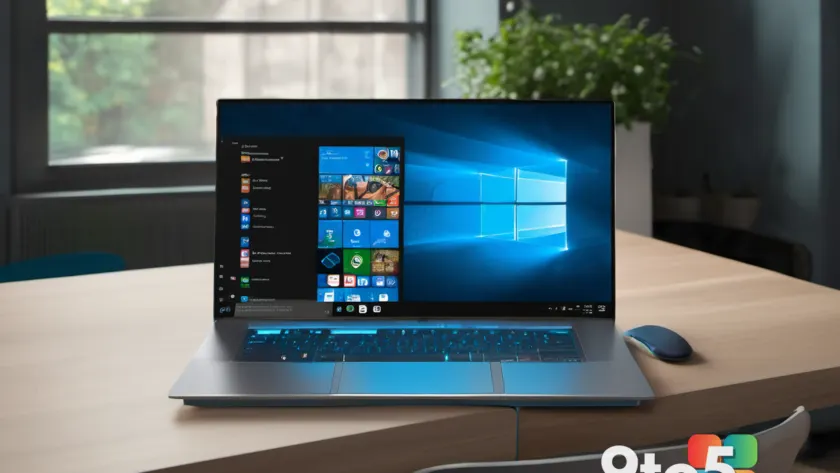
At IFA 2026, Microsoft leaned into a theme that has defined much of the year for its operating system: catching up on the basics. According to Windows Latest, Corporate Vice President Mark Linton confirmed that Windows 11 performance gains are underway, pointing to faster boot times and improved responsiveness on machines with just 8GB of RAM.
The catch is that Microsoft shared no numbers.
Windows 11 performance gains, confirmed at IFA 2026
Mark Linton, Corporate Vice President of Windows & Devices at Microsoft, told the IFA 2026 crowd that the company has been working on fundamentals.
“We’ve made significant gains on things like boot time, Windows Hello responsiveness,” Linton said, according to Windows Latest.
He added: “We’re continuing to improve on the fundamentals. We’re listening to customer feedback, continuously improving Windows, and you’ll see those updates as Windows just gets better as the updates come through.”
The comments land on top of a 2026 already full of Microsoft admitting it got some things wrong. Earlier this year, the company acknowledged that Windows 11 needed to be faster, drop ads, and ship a batch of fixes. Some of those promises have started to land, though the rollout has been slow.
Many of those fixes are long-requested features that previous versions of Windows took for granted, such as moving the taskbar, resizing the Start menu, and building more native apps. If you haven’t noticed a visible difference yet, it’s usually down to the gradual rollout rather than the changes not existing.
Faster boot times (for now, internally)
The most concrete-sounding claim is the boot-time improvement. Linton said the lock screen should appear almost immediately once the change is live, which is the kind of everyday speed bump users notice right away.
But Windows Latest understands that the faster boot time is not yet present in the preview builds Insiders are testing. In other words, Linton was likely referring to an internal build rather than something you can download today.
That distinction matters. It means the improvement is real from Microsoft’s perspective, but it hasn’t reached the hands of testers, let alone the general public. When it does arrive, you should feel the difference between pressing the power button and reaching your desktop.
Getting 8GB RAM machines to “run great” again
The second major theme is memory optimization. Microsoft has long pushed 16GB of RAM as the new baseline for Windows 11, with 32GB recommended for serious gaming. Copilot+ PCs still require a 16GB baseline, which means machines shipping with 8GB of RAM don’t qualify as Windows AI hardware.
That strategy, combined with rising memory costs, pushed PC prices up. Now Microsoft is walking that back in spirit.
“We’re optimizing so that 8 gig of RAM runs great on machines as well,” Linton said, again without providing any metrics.
This isn’t the first time Microsoft has made this promise. The company already stated it would optimize Windows 11 for 8GB RAM PCs by the end of 2026, a commitment Windows Latest reported earlier this year. The IFA remarks reconfirm that goal.
Why this matters beyond 8GB systems
It’s easy to dismiss an 8GB RAM optimization effort, since few people buy an 8GB machine for serious work. But the payoff extends well beyond low-end hardware.
When Microsoft trims the memory Windows itself consumes, and when app developers follow suit, users with 16GB, 32GB, or more will feel the difference too. Background processes are a common culprit. Applications like Discord have been reported to consume large amounts of RAM even when idle, and Microsoft Teams has been noted to use a meaningful chunk of memory while doing nothing.
The broader push to optimize Windows for less hardware is a change of direction for an industry that has, in recent years, seemed content to let software bloat grow unchecked.
What this means for you
For everyday Windows 11 users, the takeaway is modest but real. You’re not going to see a dramatic speed boost from a single update, and you shouldn’t expect the boot-time or 8GB RAM improvements to arrive tomorrow.
What you can expect is a steady stream of incremental gains. Microsoft has been rolling out long-requested features through the September 2026 Patch Tuesday update, scheduled for September 8. That update enables the movable taskbar, the resizable Start menu, and lets you remove Bing from Windows Search.
The faster boot and 8GB RAM work will likely ride along in the next big Windows 11 feature update, though Microsoft hasn’t pinned down a date.
How to get it
There’s nothing for you to install today to unlock these improvements. The boot-time and Windows Hello responsiveness gains aren’t in the current preview builds, so joining the Windows Insider program won’t get you there yet.
For the features that are already shipping, make sure you’re on the latest Windows 11 build. Head to Settings > Windows Update and check for updates. The September 2026 Patch Tuesday update arrives September 8, so plan to install it then.
For the 8GB RAM optimization, keep an eye on the next major feature update. Microsoft has committed to the work by the end of 2026, so it should be part of an upcoming release.
Source: Windows Latest
Over to you: Will you be waiting on the 8GB RAM optimization, or are you happy with your current Windows 11 setup?