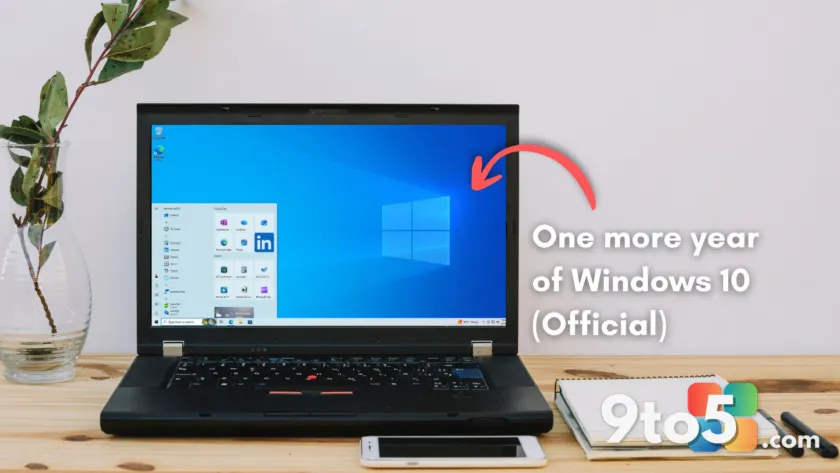
Microsoft has updated its official documentation regarding the Windows 10 Extended Security Updates (ESU) program. The consumer enrollment deadline and coverage period have been extended by one full year, now running through October 12, 2027. This change applies to users who have not yet enrolled, giving them more time to secure their devices before the final cutoff.
How to enroll in Windows 10 ESU
If you are running Windows 10 version 22H2 (Home, Pro, Pro Education, or Workstation editions), you can continue receiving critical security patches after the official end-of-support date of October 14, 2025. Enrollment is straightforward and offers three payment paths:
- Free: Available if you are signed into a Microsoft account that has previously backed up PC settings on another device.
- Microsoft Rewards: Redeem 1,000 points to cover the cost.
- Paid: A one-time fee of $30 USD. This single license covers up to 10 devices.
To enroll, navigate to Settings > Update and Security > Windows Update and select Enroll now. If you are already enrolled, your coverage will automatically extend through October 2027 without any action required on your part. Note that devices joined to a work domain or managed by Mobile Device Management (MDM) systems are not eligible for this consumer program.
Why Secure Boot updates matter
Beyond general security patches, ESU enrollment is critical for maintaining system stability regarding Secure Boot. The original 2011 Secure Boot certificates used by most Windows devices are expiring. Microsoft has been distributing updated 2023 certificates through its update pipeline to prevent startup validation issues.
ESU-enrolled Windows 10 PCs receive these certificate updates as part of the monthly Patch Tuesday releases. For example, KB5087544, released in May, included a Secure Boot status update. Devices that are not enrolled in ESU missed this critical update, potentially leaving them vulnerable to boot failures or security validation errors on certain hardware configurations.
What this means for you
Microsoft has delivered consistent monthly security updates for Windows 10 ESU users since the program launched in October 2025. This extension signals that Microsoft is accommodating users who have been slow to adopt Windows 11, particularly in markets like Germany where adoption rates remain lower than expected.
While Windows 11 has seen significant improvements in 2026—including a movable taskbar, indefinite update pause controls, and performance enhancements—Microsoft is clearly prioritizing user choice. If you prefer to stay on Windows 10 for now, enrolling in ESU ensures your PC remains protected against viruses and malware until October 2027. Devices not enrolled can no longer pause updates, which may lead to unintended upgrades or system instability.
Source: Windows Latest
Build details:
- kb5087544
Over to you: Will you enroll in ESU to stay on Windows 10 until 2027, or is it time to upgrade to Windows 11?
You may also like
 Windows 11 Canary builds bring targeted audio driver and settings improvements
 Microsoft drops new Windows 11 builds for June 19, including version 26H2 for Experimental
 Windows Insider builds for June 12: New unified update experience, typo-tolerant search, and 26H1 updates
 Windows 11 Insider builds for June 12: Unified updates, smarter search, and new inbox app notes