- Status: Announced / Phased Enforcement
- Affected Components: Enterprise KMS Host Servers, Windows Server 2025
- Announcement Date: July 22, 2026
- Mandatory Enforcement: Next Windows Server LTSC release (date unconfirmed)
Microsoft published a formal document on July 22 introducing KMS Hardware-Secured, a new policy that binds Windows volume activation servers to a Trusted Platform Module (TPM) chip. The announcement immediately sparked a wave of speculation across tech media, with several outlets framing the update as Redmond finally pulling the plug on pirated Windows 11 installations. That interpretation is fundamentally incorrect. The new attestation requirement targets only the infrastructure organizations run to activate their own fleets, leaving consumer and pirated activation methods completely untouched.
What KMS Hardware-Secured Actually Changes
At its core, the policy introduces a two-step hardware trust verification process. Before a KMS host is permitted to serve activation requests to client machines, it must use its TPM to prove two specific conditions to Microsoft’s licensing backend. First, the TPM must establish the host’s unique hardware identity, which Microsoft then validates against its expected configuration. Second, the module must confirm that the platform has not been tampered with since that initial identity was registered.
If the KMS host fails either verification step, Microsoft will refuse to authorize it as a legitimate license server. This effectively closes a long-standing attack vector where threat actors deploy spoofed or cloned KMS servers inside corporate networks. A rogue server that mimics the response format of a genuine host can quietly activate dozens of machines without the organization ever realizing those licenses were never paid for.
Microsoft’s documentation explicitly states that this move is designed to strengthen Key Management Service integrity rather than hunt down individual pirated copies. The shift aligns with a broader industry trend toward hardware-rooted trust, where software licensing decisions are anchored to physical components that are significantly harder to spoof than network addresses or software keys.
Who Is Actually Affected by the TPM Requirement
The confusion stems from conflating KMS Hardware-Secured with entirely separate anti-piracy measures. Some publications tied the announcement to KMS38, an offline activation bypass that Microsoft successfully neutralized in November 2025. KMS38 never interacted with TPM chips or enterprise activation servers. It exploited a Windows upgrade helper file to fabricate a distant expiration date, and Microsoft’s countermeasure simply updated how that file validates its internal timestamps. The two initiatives share a name but operate on completely different technical foundations.
Another common misconception involves Online KMS piracy, which does rely on a server component. However, that method stands up a counterfeit host directly on the user’s machine or a public relay. When Windows queries the fake server, it receives a straightforward approval response. Because the verification chain never reaches Microsoft’s backend, the new TPM attestation requirement has no opportunity to trigger a failure.
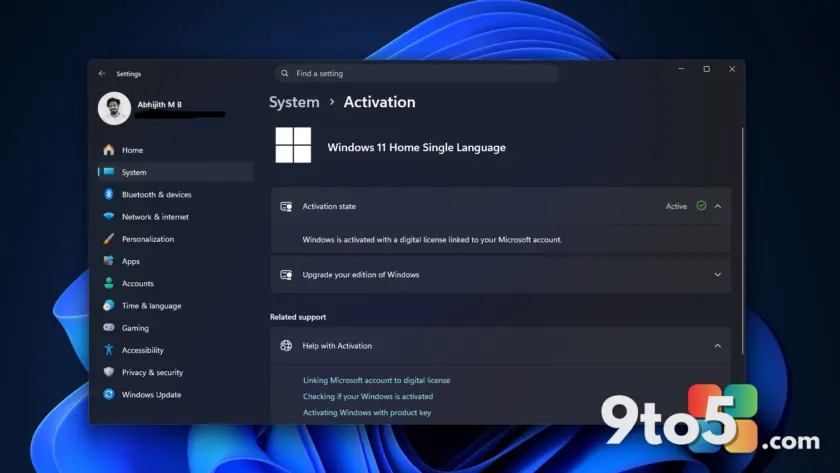
The vast majority of pirated Windows installations today bypass KMS entirely. HWID activation registers a machine’s hardware identifier with Microsoft’s servers to generate a permanent digital license, while TSforge writes forged data directly into the Software Protection Platform files. Neither workflow contacts a KMS host, meaning the new hardware-bound policy simply does not intersect with those activation pipelines.
How to Check Your Server Readiness Now
Organizations running physical KMS hosts should verify that their hardware is certified on the Windows Server Catalog and that the TPM is physically installed and enabled in the firmware. Microsoft has noted that guidance for virtual KMS hosts will be published in a separate follow-up document, acknowledging that virtualized environments require a distinct attestation approach.
Administrators can test compatibility immediately by opening an elevated PowerShell session and running Get-TpmSupportedFeature -FeatureList "Key Attestation". A system capable of meeting the new standard will return a clear confirmation that key attestation is supported. This provides a reliable baseline before the enforcement window opens.
Starting in August 2026, Windows Server 2025 will begin displaying readiness alerts for the new requirement. Running slmgr /dlv on a KMS host will return one of two explicit status messages: either the device is eligible to serve as a KMS host with hardware-based security, or it does not meet the requirements. The identical status will also be logged under Applications and Services Logs > Key Management Service in Event Viewer.
It is important to note that none of these checks currently block activation. Existing KMS deployments will continue operating exactly as they do today until Microsoft ships the next Windows Server LTSC release that formally enforces the policy. Organizations have a clear runway to audit their hardware inventory and replace or upgrade hosts that lack compatible TPM modules.
What This Means for You
For everyday Windows users, the announcement should be treated as a clarification rather than a warning. Microsoft is not deploying a remote kill switch on consumer PCs, and your current activation status will not be retroactively invalidated by a server-side policy change. The TPM attestation requirement is strictly an enterprise infrastructure control that sits between your machine and your organization’s activation gateway.
The persistence of Windows piracy remains a separate conversation entirely. A standalone Windows 11 Home license costs $139 from Microsoft, with Pro edition pricing at $199. While OEM partners negotiate volume discounts, that cost is frequently absorbed into the hardware price anyway. For budget builders and users purchasing entry-level laptops, paying nearly two hundred dollars for an operating system on top of the base hardware presents a genuine financial barrier.
Microsoft’s business model has undeniably shifted toward recurring revenue streams like Microsoft 365, OneDrive storage, Copilot subscriptions, and advertising within the MSN feed. The company has publicly acknowledged that aggressive upselling crossed a line, promising a calmer operating system experience, and has begun removing default ads from Widgets. However, the underlying incentive structure remains unchanged. Whether a Windows license was purchased appears to matter far less to Redmond than whether you continue using the platform and its associated services.
In practice, this means the new KMS Hardware-Secured policy will tighten enterprise licensing security without disrupting the consumer activation landscape. IT administrators should focus on hardware inventory audits, while home users can safely ignore the piracy crackdown headlines that have circulated since the July announcement.
Source: Windows Latest
Over to you: Will your organization’s current KMS hosts pass the new TPM attestation check, or are you planning to migrate to cloud-based licensing?
You may also like
 Microsoft Confirms Forced New Outlook Rollout by March 2027 Despite User Backlash
 LG Monitor Adware Proves Windows 11 App Installation Controls Need Tightening
 Microsoft Overhauls Windows 11 Update Downloads and Installs to Fix Long-Standing Frustrations
 Global PC Shipments Drop 4% in Q2 2026 as Memory Crisis Breaks Growth Streak