Microsoft officially pulled the plug on the Surface Duo line in 2023, leaving a dedicated community of users without a device that matched their preferred form factor. For years, the Surface Duo stood alone in the smartphone market with its unique 360-degree hinge and dual-screen layout, catering to users who prioritized a wider, shorter aspect ratio over the tall, narrow slabs that dominate modern phones. Since then, the foldable market has shifted heavily toward traditional book-style foldables, leaving many Surface Duo loyalists feeling stranded.
That dynamic appears to be changing. Samsung’s latest flagship foldable, the Galaxy Z Fold 8, has arrived with a design philosophy that closely mirrors the dimensions and usability principles that made the Surface Duo successful. While it lacks the dual-screen hardware, the overall footprint and screen proportions deliver a familiar experience that many former Surface Duo users have been waiting for. This isn’t just a incremental update to Samsung’s foldable lineup; it represents a meaningful shift in how manufacturers are approaching smartphone ergonomics.
Why the Surface Duo Form Factor Matters
The Surface Duo was never designed to compete directly with traditional flagships on raw specifications. Instead, it focused on optimizing the user experience through its 3:2 aspect ratio displays and compact folded profile. When used as a single device, the 5.6-inch screens provided a comfortable typing surface that reduced thumb strain. When unfolded, the combined 8.1-inch display offered a tablet-like canvas for multitasking without the bulk of a dedicated tablet.
Microsoft’s decision to discontinue the Surface Duo left a gap in the market for users who valued these specific ergonomic benefits. While other manufacturers explored foldable technology, most prioritized larger inner screens at the expense of portability. The result has been devices that, while innovative, often felt unwieldy in daily use. The Galaxy Z Fold 8 addresses this exact concern by returning to a more balanced proportions that align with what Surface Duo users found most valuable.
Galaxy Z Fold 8 vs. Surface Duo: The Specs
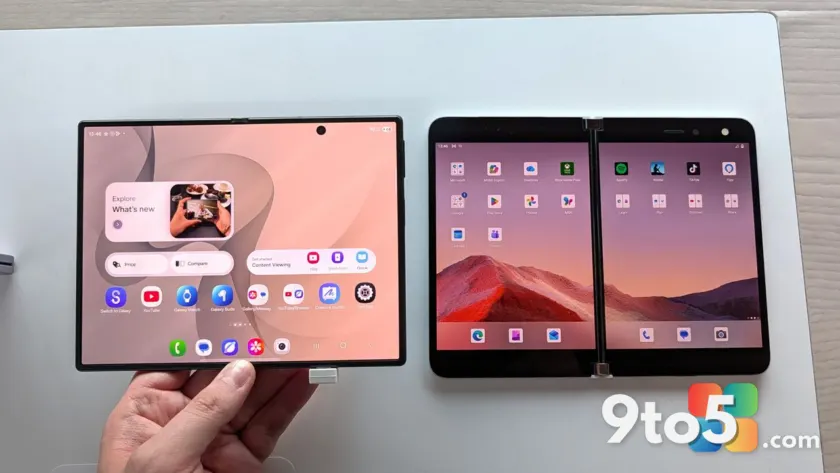
When comparing the hardware specifications side by side, the similarities in design philosophy become immediately apparent. Both devices prioritize a compact folded profile and wide inner displays, though they achieve these goals through different mechanical approaches. The Surface Duo utilized two separate displays connected by a physical hinge, while the Galaxy Z Fold 8 relies on a single flexible OLED panel with a standard foldable hinge.
The dimensional comparison reveals why the Galaxy Z Fold 8 feels so familiar to former Surface Duo owners. The folded dimensions of the Galaxy Z Fold 8 measure 123.9 × 81.9 × 9.7 mm, while the Surface Duo sits at 145.2 × 93.3 × 9.9 mm. The width difference is minimal, meaning both devices occupy roughly the same amount of space in a pocket or bag. When unfolded, the Galaxy Z Fold 8’s 7.6-inch inner display at a 4:3 aspect ratio provides a usable canvas that closely matches the Surface Duo’s combined 8.1-inch display.
Weight distribution also plays a crucial role in daily usability. The Galaxy Z Fold 8 tips the scales at 201 grams, making it noticeably lighter than the Surface Duo’s 250-gram chassis. This reduction in mass translates to less hand fatigue during extended typing sessions and improved one-handed usability when the device is folded. The thinner bezels and more refined hinge mechanism on the Samsung device also contribute to a more polished overall feel.
Real-World Usage: Typing and Multitasking
Numbers on a spec sheet only tell part of the story. The true measure of a device’s success lies in how it performs during everyday tasks. Typing on the Galaxy Z Fold 8’s cover screen, which measures 5.5 inches, closely mirrors the experience of using the Surface Duo’s individual displays. The wider aspect ratio allows keys to be spaced more naturally, reducing the need to stretch thumbs across a cramped keyboard layout.
Multitasking remains the one area where the Galaxy Z Fold 8 diverges from the Surface Duo’s approach. The Surface Duo’s operating system was specifically designed to leverage its dual-screen hardware, automatically distributing applications and pop-ups across both displays without requiring manual configuration. Samsung’s One UI, while highly customizable, still relies on user-initiated multitasking gestures and split-screen modes. This means that the seamless, automatic app distribution that Surface Duo users took for granted does not translate directly to the Galaxy Z Fold 8.
However, the underlying principle remains the same: a wider screen real estate fundamentally changes how users interact with mobile applications. Text and images display more content across a single line, reducing the need for constant scrolling. The overall interface feels less cramped, and the transition between apps becomes more fluid when working with multiple windows. These improvements, while requiring some adjustment, deliver a noticeably more productive mobile experience.
What This Means for You
For users who found themselves stuck between the Surface Duo and traditional smartphones, the Galaxy Z Fold 8 offers a compelling resolution. The device successfully captures the ergonomic advantages that made the Surface Duo popular while addressing the hardware limitations that held it back. The single flexible display eliminates the gap between screens, while the refined hinge mechanism reduces the notorious crease issue that plagued earlier foldables.
The shift toward shorter, wider foldable designs signals a broader industry recognition that not all users prioritize maximum screen size above all else. Manufacturers are beginning to understand that portability, typing comfort, and balanced ergonomics matter just as much as raw display area. This trend benefits consumers by expanding the range of form factors available, rather than forcing everyone into a single design template.
If you are currently using a traditional slab phone and find yourself longing for the productivity benefits of a wider display, the Galaxy Z Fold 8 represents a practical upgrade path. The device delivers the core Surface Duo experience in a more refined package, with improved cameras, longer software support, and broader app compatibility. The main trade-off involves adapting to Samsung’s multitasking approach rather than the automatic distribution system that defined the Surface Duo experience.
How to Get the Galaxy Z Fold 8
The Samsung Galaxy Z Fold 8 is available through major carriers, Samsung’s official online store, and authorized retailers. Pricing starts at the standard flagship foldable tier, positioning it as a premium device for users who prioritize design and productivity over cost savings. Samsung typically offers trade-in programs and carrier financing options that can reduce the upfront cost for eligible customers.
For former Surface Duo users considering a switch, the Galaxy Z Fold 8 requires a brief adjustment period. The transition from dual-screen hardware to a single flexible display involves getting used to the fold line and adapting to Samsung’s multitasking gestures. However, the overall form factor and typing experience closely match what made the Surface Duo enjoyable, making the learning curve significantly shorter than switching to a traditional tall foldable.
The arrival of the Galaxy Z Fold 8 with its distinct proportions suggests that the market is finally catching up to the design principles that Microsoft pioneered with the Surface Duo. While the original Surface Duo may have been ahead of its time, its legacy appears to be influencing the next generation of foldable smartphones in meaningful ways.
Source: Latest from Windows Central
Over to you: Are you making the switch from a Surface Duo to the Galaxy Z Fold 8, or sticking with your current setup?