- Status: Leaked internal prototype (not a public release)
- Project Codename: Aion
- Underlying Codebase: Win3 (experimental lightweight Windows variant)
- Key Feature: Agentic AI desktop UI powered by Copilot and Edge
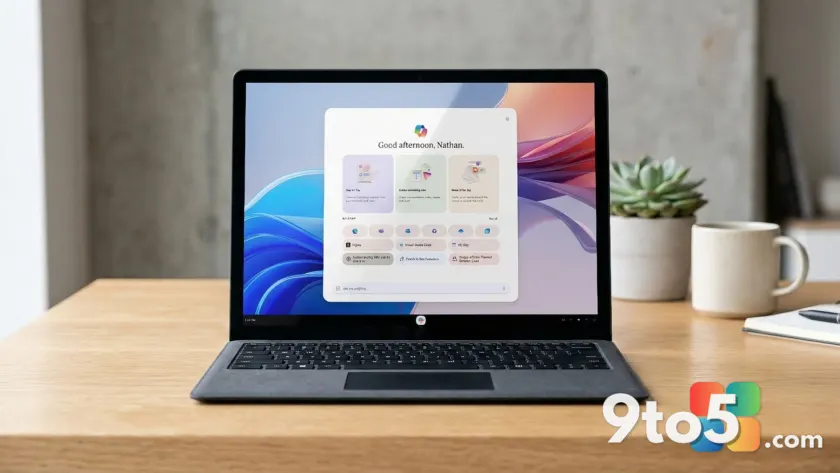
A leaked video circulating on the BetaWiki Discord server has provided a rare glimpse into Aion, an internal Microsoft exploration of a dedicated AI operating system. The footage, which sources indicate is real but early working code from 2024, showcases a desktop interface built entirely around Microsoft Copilot and agentic AI capabilities.
1. A web-first OS running on the Win3 codebase
The most significant technical detail in the leak is that Aion runs on Win3, described as a stripped-back version of the Windows codebase. Unlike standard Windows 11, this lightweight foundation does not support legacy Win32 applications natively. Instead, it relies on web technologies to deliver functionality.
This architectural choice aims to provide faster update cycles, improved battery life, and enhanced security by removing the overhead of older application frameworks. If you need access to traditional desktop software, the system appears to leverage Windows 365 to remote into a Cloud PC, streaming those specific applications rather than running them locally.

2. Copilot replaces the Start menu and file explorer
The user interface in the video abandons traditional navigation methods. There is no conventional Start menu or File Explorer. Instead, a multi-modal input box serves as the central hub for finding files, launching applications, and browsing the web.
Copilot is embedded directly into the core of the shell, acting as an agentic assistant that handles tasks rather than just answering questions. The narrator in the leaked video describes Aion as a “web-based agent OS” where Copilot is not an add-on but the primary method of interacting with the system.
3. ‘Spaces’ for workflow organization
The taskbar in Aion features a unique organizational tool called Spaces. This feature automatically groups related apps and websites into single buckets on the taskbar. Users can click these spaces to instantly restore entire workflows, such as a specific project involving multiple browser tabs and documents.
These Spaces also appear in what resembles a Start menu interface, offering a one-click method to launch complex sets of resources simultaneously. This suggests Microsoft is experimenting with context-aware productivity tools that go beyond simple app pinning.
What this means for you
It is important to note that Aion remains an experimental project, potentially originating from a Hackathon or internal research team. There is no confirmation that Microsoft plans to ship this specific OS to consumers. However, the concepts shown—particularly agentic AI integration and streamlined workflows—are likely influencing the direction of Windows 11.
Microsoft has recently announced Project Solara, another agentic OS experience that generates UI on demand. It is possible that lessons learned from Aion are being refined into features like just-in-time UI generation for broader Windows releases. While the full Copilot-first desktop may not arrive soon, elements of this design philosophy are already filtering into mainstream updates.
Source: Windows Central
Over to you: Would you trust an OS that requires cloud streaming for traditional desktop apps, or do you prefer local execution?