Microsoft’s design team is on a campaign to clean up Windows 11’s leftover legacy interfaces, and the list is getting long. March Rogers, Microsoft’s Partner Director of Design, confirmed that the company is “gradually working its way through modernizing older UI in Windows” — and every ancient dialog left over is next on the chopping block.
The complaint that sparked this round came from users who pointed out that parts of Settings still look nothing like the rest of Windows 11. One glaring example is the Voice packages dialog, which I’ll get to in a moment. But the broader issue is that even in 2026, it’s remarkably common to stumble across Windows 95, Windows 7, Windows 8.1, and even Windows 3.1-era design in the most modern version of the operating system.
#1 The Voice packages dialog
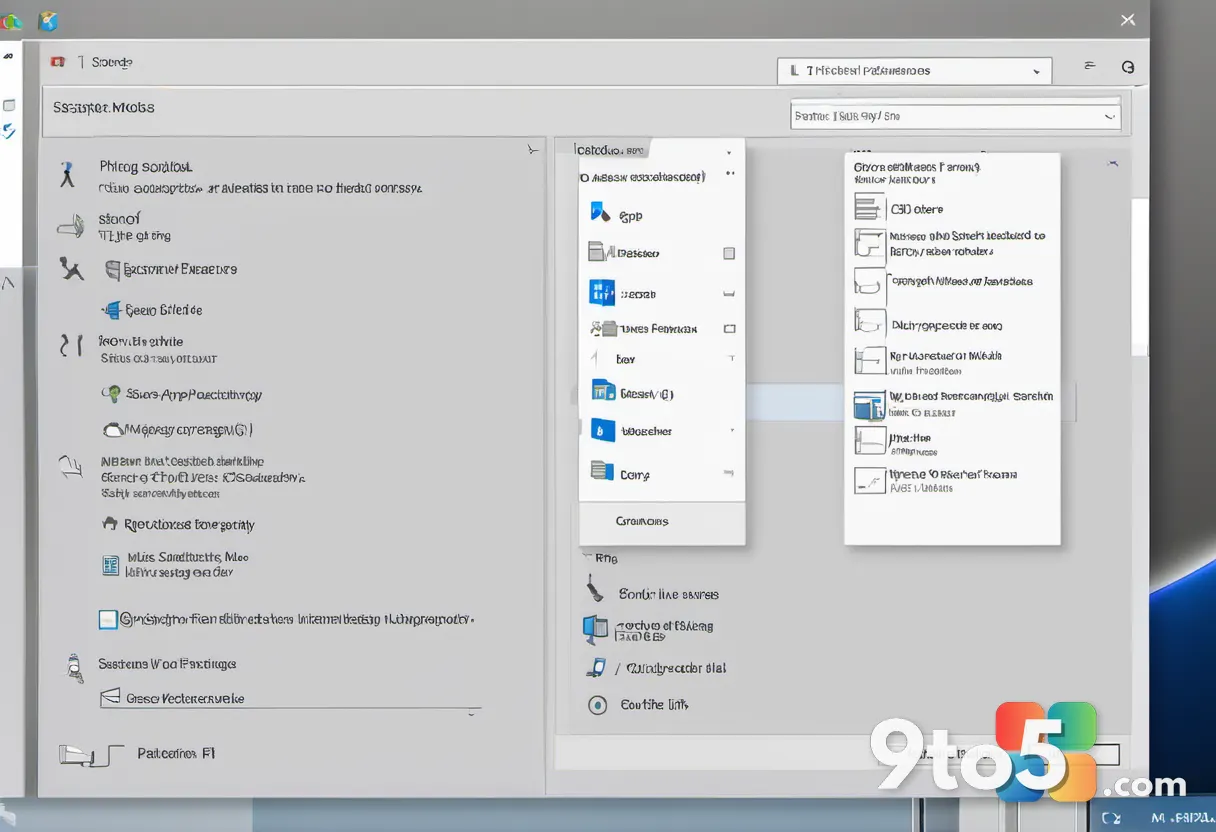
If you want to add a new voice to Windows 11, you head to Settings > Time & language > Speech and open the Voice packages dialog. It lets you search for languages, tick checkboxes, and pick from a list of voice packages.
The problem isn’t so much that it works. It’s that the dialog looks like a relic. It doesn’t even use the rounded corners that Microsoft made a signature feature of Windows 11 — corners it has already rolled out to legacy areas like the Control Panel.
This may not be something most of you use regularly, but it’s a fair complaint. It points to a wider pattern: Windows 11 still ships with dozens of older-style dialogs scattered through its settings.
#2 Reset this PC
One user asked Rogers why they keep running into Windows 8.1-era dialogs. The answer: they’re being worked on. A prime example is Reset this PC, the dialog that lets you choose what to keep when you wipe your machine.
Right now, it’s built using the Windows 8.1 design language. Microsoft has confirmed it’s on the modernization list too.
#3 Two approaches: dark mode and full WinUI 3 modernization
Rogers’ statements aren’t new. Back in May, he said, “We are working through our list of all older dialogs and rewriting them in WinUI 3” — Microsoft’s modern native UI framework.
But Microsoft isn’t just rewriting everything at once. There are two approaches, and the choice depends on how risky it is to replace the existing code.
For some dialogs, the low-risk move is simply adding dark mode support. Microsoft confirmed this “low-risk” approach for modernizing legacy areas of the OS first, since a full rewrite could break things.
For others, a complete rebuild in WinUI 3 is the answer. The File Properties dialog is a real example — it has actually been rebuilt in WinUI 3, proving Microsoft does want to bring the modern framework to all areas, just not all at once.
#4 The Run dialog
The Run dialog is the clearest example of the middle ground. Microsoft built a new version using C# and WinUI 3, with dark mode, an updated history list, and support for opening your home directory with the ~ command.
But it’s not killing off the legacy version. The new Run dialog will be optional at least initially, so you can switch between the new and old interfaces.
There’s also a performance angle. Microsoft found the new Run dialog to be faster than the Windows 95-era version it’s replacing — a median time-to-show of 94 milliseconds, compared to 103 milliseconds for the legacy build. A small difference, but it’s a useful point: a modern interface shouldn’t need to come with slower performance.
#5 AutoPlay and Print Management
Microsoft has also confirmed that AutoPlay is getting its own WinUI 3 redesign. That’s the dialog that pops up when you connect a removable device like your phone and asks what you’d like to do with it.
Another example is the new Print Management app, which is built using WinUI and matches the capabilities of the legacy printing tools. It’s one of Windows 11’s oldest legacy tools, now given a modern face.
#6 Local accounts, the login screen, and the Charms bar
Some old interfaces are especially awkward because they still reference features that no longer exist. Windows 11’s local-account switching flow can show a device-encryption warning that tells you to use the Windows 8 Search charm — a feature that’s been gone for years.
Marcus Ash, who leads Design and Research for Windows and Devices, confirmed that such interfaces are on the revamp list too.
Microsoft has already said the Windows 8-style input switcher on the login screen will be redesigned with Windows 11’s UI. Within Settings, it’s been updating pages, account dialogs, and Pen settings, and readers can expect more.
What This Means for You
For most users, the takeaway is simple: you’ll see fewer of those dated-looking windows over time. But you won’t have to force-install the new look — many of these changes are optional or rolled out gradually, so you may not notice a dramatic overhaul overnight.
IT admins managing a fleet should note that these are design-level changes, not functional ones. The underlying behavior of each dialog stays the same; only the look and the framework behind it change. That means no sudden regressions in how these tools work, just a cleaner appearance.
How to Get It
Since these are gradual, you won’t find a single toggle to modernize everything. Keep Windows 11 updated, and watch for the new builds that ship these redesigned dialogs. The Run dialog, for instance, is optional, so you can try the new version and switch back to the classic if you prefer.
Until then, you can still spot the legacy dialogs wherever they hide — and report them, which is apparently what gets them onto the list.
Source: Windows Latest
Over to you: Will you switch on the new Run dialog, or stick with the Windows 95-era version you’ve used for years?