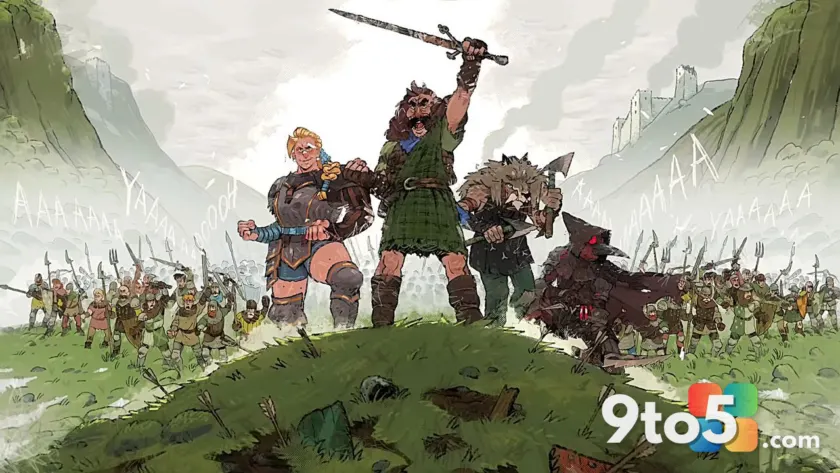
The current state of the gaming industry has left a lot of players, including this writer, feeling genuinely drained. Between the discontinuation of physical media, account access controversies, and the rising costs of hardware driven by AI demand, the hobby feels less like a pastime and more like a chore. After weeks of reporting on these headwinds, I found myself completely unable to get excited about the upcoming titles on my radar. That rut ended the moment my colleague handed me a copy of Tears of Metal.
Developed by Paper Cult, this early-access title is a roguelike hack-and-slash that wears its Dynasty Warriors inspiration on its sleeve, but it quickly carves out its own identity through relentless pacing, deep progression systems, and a combat loop that demands genuine attention. It is currently available on Xbox on PC and Steam, with console and cloud versions planned for the future.
A Procedural Crusade Against Demonic Invaders
The premise is straightforward but effective. You step into the boots of legendary Scottish warriors fighting to reclaim your homeland from demonic forces unleashed by the mysterious Dragon Meteor. The game drops you into procedurally generated campaigns where the primary objective is to carve through waves of enemies to reach a final boss on each map.
What sets Tears of Metal apart from its main inspiration is the tactical layer it adds to the traditional hack-and-slash formula. Maps are not just open arenas; they are tactical grids where positioning matters. You must manage a rising threat level that punishes lingering too long in one area, forcing you to push forward aggressively. To survive, you are not just swinging a weapon; you are commanding units in your army to flank priority targets, timing dodges to trigger explosive counter-attacks, and collecting items that grant passive traits.
These passive traits are where the game’s strategic depth shines. You might pick up an item that causes explosions every time you dodge, or one that links damage across a group of enemies so hitting one affects them all. Building a loadout around these synergies transforms each run into a puzzle you solve with violence.
Permanent Progression That Respects Your Time
Roguelites often struggle with the balance between short-term excitement and long-term investment. Tears of Metal handles this exceptionally well through its persistent upgrade system. Every time you complete a campaign, regardless of whether you win, lose, or quit, you earn permanent resources.
These resources are poured into a meta-progression tree that unlocks new moves for your characters, reduces item shop costs, and promotes your army units. Promoted units become stronger in future runs and provide passive benefits as long as they survive. This means that even if you die repeatedly to a specific boss, you are never truly starting from zero. You are returning with new tools, deeper knowledge of enemy patterns, and a slightly more powerful army.
This system also introduces difficulty modifiers. Once you clear a campaign, you can unlock optional challenges that increase enemy health, damage, or add new behaviors. These modifiers are essential for players who want to test their mastery and earn greater rewards. It creates a natural difficulty curve that scales with your skill rather than forcing a binary easy/normal/hard choice at the start.
Combat That Demands Attention and Rewards Mastery
There are three playable characters in the early access build, with more promised in future updates. Each has a distinct playstyle, but the standout is Brienne Ironleg, a brawler who relies on extreme speed and close-quarters strikes. Her animations are snappy, her hit feedback is heavy, and her combo potential is staggering once you learn her timing windows.
However, do not mistake the fast pace for a lack of challenge. Enemies in Tears of Metal scale aggressively. As you progress deeper into a run, foes will begin to outdamage you and kill you in one or two hits if you make a mistake. Bosses are particularly punishing, requiring you to study their attack patterns and identify safe windows to strike.
Dying to a boss after a long run is genuinely demoralizing. Yet, the game’s design ensures that frustration is temporary. Coming back with a new build, unlocked abilities, and the knowledge of how to counter the boss’s tells makes eventual victory incredibly satisfying. The loop of failure, analysis, adaptation, and triumph is the core hook, and it is executed with precision.
Co-Op Potential and Platform Availability
While the solo experience is deeply compelling, Tears of Metal is designed with multiplayer in mind. A four-player co-op mode allows you to tackle campaigns with friends, which likely amplifies the chaos of managing army commands and dodging boss attacks. Given how much fun it was to watch my friends struggle with the same mechanics, the shared experience of mastering the game’s systems is a major draw.
For those interested in jumping in, the game is available right now on Xbox on PC and Steam via Xbox Game Preview and Early Access, respectively. Paper Cult has confirmed that full releases on Xbox Series X|S and Xbox Cloud Gaming are planned for a later date. If you are a fan of hack-and-slash games that want you to think as much as you swing, or if you simply need a cathartic outlet after a long week of industry news, this early-access gem is absolutely worth your time.
What This Means for You
The early-access nature of Tears of Metal means you are getting a polished but still evolving experience. Paper Cult has clearly listened to community feedback, as the progression systems feel refined and the combat tuning is tight. For players tired of games that demand your time but give back little, this title respects your investment through meaningful progression and replayability. It is a reminder that not every game in development needs to be a live-service monolith; sometimes, a focused, single-player experience with co-op options is exactly what the hobby needs.
Source: Latest from Windows Central
Over to you: Are you team solo mastery or team co-op chaos when tackling Tears of Metal’s hardest modifiers?
You may also like
 Halo: Campaign Evolved Review: A 25-Year-Old Classic Gets a Modern Makeover and Third-Person Camera
 ASUS ExpertBook Ultra Review: A Near-Perfect Business Laptop Held Back by Price
 Razer Seiren V3 Chroma Review: 32-Bit DSP Brings Broadcast Clarity to RGB Mics
 HyperX OMEN 15 Review: OLED Display Steals the Show from RTX 5070