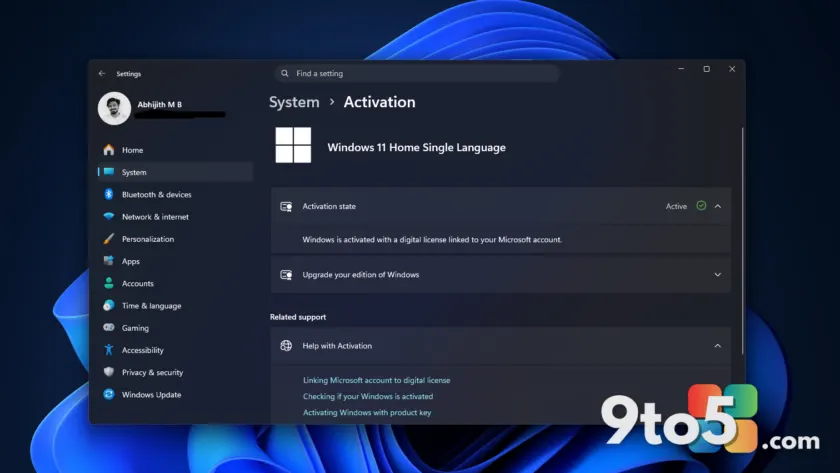
Microsoft published a formal document on July 22 outlining KMS Hardware-Secured, a new licensing requirement that binds Windows volume activation servers to a Trusted Platform Module (TPM) chip. The announcement immediately sparked speculation across tech forums and social media, with several publications framing it as a sweeping crackdown on pirated Windows 11 installations. The short answer is that the panic is misplaced. While the policy introduces a significant security layer for enterprise environments, it does not target individual consumers or the piracy methods they actually use.
Key Management Service (KMS) has long been the backbone of Windows activation for large organizations. Instead of every device on a corporate network reaching out to Microsoft’s servers individually, a local KMS host server handles activations for the entire fleet. This reduces bandwidth, simplifies management, and keeps activation data internal. The new KMS Hardware-Secured policy modifies how that host server proves its legitimacy to Microsoft.
What KMS Hardware-Secured Actually Requires
Under the new framework, a KMS host must perform TPM attestation before Microsoft allows it to serve activation requests. This involves two distinct verification steps. First, the TPM establishes the host’s hardware identity, which Microsoft cross-references against an expected baseline. Second, the TPM confirms the platform has not been tampered with since that identity was originally established.
If a server fails either check, it is completely blocked from handing out licenses. This creates a hardware-rooted chain of trust that makes it significantly harder for unauthorized entities to impersonate a legitimate activation server within an organization’s network.
Why Microsoft Is Implementing This Change
Microsoft’s documentation explicitly states that the driver behind KMS Hardware-Secured is the rise of rogue KMS servers. Attackers have increasingly deployed fake or cloned KMS hosts inside organizations that already run legitimate infrastructure. Because these rogue servers mimic the response format of a real KMS host, they can quietly activate machines that the organization never paid to license.
According to Microsoft’s Windows IT Pro Blog, this practice has become a persistent threat vector for enterprises. By tying activation authority to a hardware-secured identity, Microsoft ensures that only verified, untampered servers can participate in the volume licensing ecosystem. This protects organizations from silent license drift and reduces the attack surface for internal activation spoofing.
How Organizations Should Prepare
For IT administrators managing physical KMS hosts, Microsoft has provided clear preparation steps. The host server must be certified on the Windows Server Catalog, and its TPM must be installed and enabled. Guidance for virtual KMS hosts is still pending, with Microsoft noting that specific rules for virtualized environments will be published in a future update.
Admins can verify readiness right now by opening an elevated PowerShell session and running the following command:
Get-TpmSupportedFeature -FeatureList "Key Attestation"
A compatible system will return “key attestation” in the output, confirming the hardware capability exists before enforcement begins. Starting in August 2026, Windows Server 2025 will display readiness alerts for this requirement. Running slmgr /dlv on a KMS host will return one of two status messages: “This device is eligible to serve as a KMS host with hardware-based security,” or “This device does not meet the requirements for using KMS host with hardware-based security.” These logs will also appear in Event Viewer under Applications and Services Logs > Key Management Service.
It is important to note that nothing blocks activation yet. Existing KMS deployments will continue operating exactly as they do today until Microsoft ships the next Windows Server LTSC release that makes the requirement mandatory.
Why This Does Not Crack Down on Pirated Windows
Several tech outlets linked KMS Hardware-Secured to the shutdown of KMS38, an offline activation method Microsoft disabled in November 2025. This comparison is technically inaccurate. KMS38 exploited a Windows upgrade helper file to fake a long activation date and had nothing to do with TPM chips or KMS servers. Microsoft’s fix for KMS38 simply changed how that helper file validates its data, addressing an unrelated vulnerability.
The piracy method that does rely on KMS, known as Online KMS, operates by standing up a fake server on the user’s PC or a public node. When Windows asks if it can activate, the fake server simply says yes. Because the activation never reaches Microsoft’s servers, there is no TPM check for it to fail. KMS Hardware-Secured only validates the server *issuing* the license, not the client receiving it.
Furthermore, the vast majority of pirated Windows installations today do not use KMS at all. HWID activation, which is the default recommendation for most piracy toolkits, registers a PC’s hardware ID with Microsoft’s activation servers as a legitimate digital license. Other methods, like TSforge, write forged licensing data directly into the Software Protection Platform files. Neither approach requires a KMS host, meaning the new hardware attestation requirement bypasses them entirely.
What This Means for You
For home users and enthusiasts, this announcement changes nothing about your current Windows installation. Microsoft is not hunting down pirated copies of Windows 11 for individual consumers. The KMS Hardware-Secured policy is strictly an enterprise-focused security measure designed to protect corporate licensing infrastructure from spoofing attacks.
For IT professionals, the shift represents a move toward hardware-bound licensing verification. Organizations will need to audit their KMS host hardware for TPM support and ensure compliance before the mandatory enforcement date. While virtual host guidance is still pending, physical deployments should be prioritized for readiness testing now.
What to Do Next
If you manage a KMS deployment, run the Get-TpmSupportedFeature command immediately to identify hosts that lack key attestation support. Monitor the Windows Server Catalog for updated server certifications and wait for Microsoft’s upcoming documentation on virtual KMS host requirements. Until the next LTSC release ships, your current setup will continue to function without interruption.
The broader takeaway is that Microsoft’s licensing strategy continues to evolve toward hardware-rooted trust, but the company’s revenue model remains heavily focused on subscriptions and services rather than policing individual license keys. Whether you are an enterprise admin or a home user, the immediate priority is understanding the new attestation requirements for server-side licensing, not worrying about client-side enforcement.
Source: Windows Latest
Over to you: Are you managing a KMS deployment in your organization, or just monitoring the changes from the home user side?
You may also like
 How AI Security Patches Are Accelerating Across Major Vendors
 Wintoys Gets Major Overhaul: Windows 11 Utility Gets Significant Improvements
 Microsoft 365 Profile Cards Are Getting a Major Update — Here’s What Admins Need to Know
 Chrome Finally Catches Up to Edge on a Windows 11 Media Feature It Held for a Decade