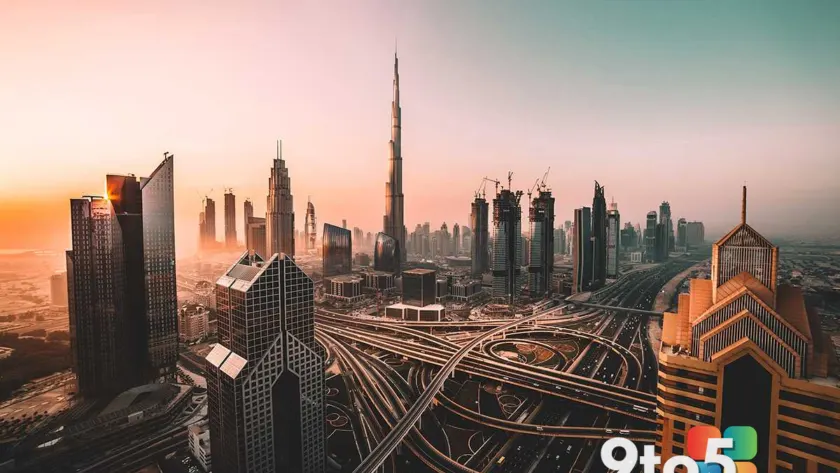
Walking through Dubai, the contrast between its bustling tech ambitions and the regional turmoil nearby is stark. Despite ongoing conflicts in neighboring countries, the city remains a functioning global business center, with residents maintaining their routines against a backdrop of extreme heat reaching 106 degrees Fahrenheit. The UAE, comprising seven emirates with Dubai and Abu Dhabi as the most prominent, is rapidly emerging as a major Dubai AI hub and a potential powerhouse in artificial intelligence.
The region’s strategic importance has drawn high-level international attention. According to a report in The Wall Street Journal, the United States sent a CIA operative to vet the UAE’s top AI firm, signaling a desire to secure future chip and AI partnerships. This diplomatic outreach underscores how other nations view the region’s potential. Mahmood Abdulla, a regional technology expert, described the UAE’s goal in a 2025 LinkedIn post as becoming “a neutral AI corridor between East and West,” similar to Switzerland’s role in global finance.
#1 Aggressive Data Center Expansion
While the United States faces growing backlash and moratoriums on data center construction in states like New York, the UAE is pursuing the opposite path. The government is actively backing an aggressive buildout of AI infrastructure, most notably through the Stargate UAE project in Abu Dhabi. This initiative involves major technology firms including OpenAI and Oracle, aiming to establish a massive computational backbone for the region.
The business model behind this expansion is rooted in the UAE’s natural resources. Abu Dhabi has planned a strategy to redirect its vast energy reserves—boasting up to 100 billion barrels of known oil reserves—toward powering data centers that generate AI tokens. These tokens are then sold as compute resources, creating a new revenue stream beyond traditional oil sales. With oil markets volatile due to global conflicts and the rise of renewables, shifting energy use to AI data centers offers a potentially more stable long-term income source.
Unlike the regulatory hurdles and community opposition seen in parts of the US, a ban on data center construction in the UAE seems unlikely. The government’s support provides a clear pathway for these projects to proceed, positioning the region as a critical node in the global AI supply chain.
#2 Entrepreneurial Culture and Infrastructure
Dubai’s growth as a tech center is deeply tied to its entrepreneurial environment. AI is already integrated into daily life, much like in China, where technology is embedded in factories, homes, and infrastructure. However, local companies tend to emphasize user experiences over boasting about superintelligence models, a cultural difference noted by founders in the region.
Infrastructure projects are also accelerating. Dubai is targeting a launch later this year for robotic air taxis flying from the airport into the city, a timeline that precedes similar tests in New York City. Despite this, Dubai lags behind the US in autonomous ground transport, with only a limited number of self-driving taxis operating in tourist areas as of last year.
The geopolitical situation remains a complicating factor. Dubai Internet City, a hub housing offices for Microsoft, Oracle, and IBM, largely emptied when the Iran war began in late February. Foreign tech workers departed, and property prices declined. However, the real estate market is now seeing opportunistic investors buying at lower prices, betting that the conflict will not derail the UAE’s long-term growth.
Financial incentives are also drawing talent. High tax burdens in Western nations are pushing wealthy founders to relocate to Dubai’s tax-free environments. The UAE is also opening doors to digital nomads and freelancers through new visa programs. While these visas cost thousands of dollars annually, the lower cost of living compared to the US can offset the expense, making it an attractive option for remote workers.
#3 Regional Rivals and Labor Dynamics
The UAE faces increasing competition from Saudi Arabia, which is also rising as a tech powerhouse. Under its Vision 2030 program, Riyadh has implemented rapid reforms to attract business. A key policy requires corporations to establish regional headquarters in Saudi Arabia to win government contracts, directly challenging Dubai’s status as the region’s primary business hub.
The UAE’s reliance on immigrant labor presents both advantages and challenges. While it provides a skilled workforce, there is currently no pathway for entrepreneurs or long-term tech workers to retire in the country, which can undermine retention. Despite these hurdles, the combination of attractive business conditions, local infrastructure, and a talent pool keeps the region appealing. As one founder noted, if the US does not retain its most skilled immigrants, the UAE is ready to welcome them.
What does this mean for the global tech landscape? The UAE’s push to become a Dubai AI hub highlights a shift in where AI infrastructure is being built. With government backing and energy resources, the region offers a stable alternative to the regulatory challenges facing Western data centers. However, competition from Saudi Arabia and regional instability remain factors to watch.
Source: Computerworld
Over to you: How do you think the UAE’s focus on energy-backed AI compute will compare to US data center strategies?