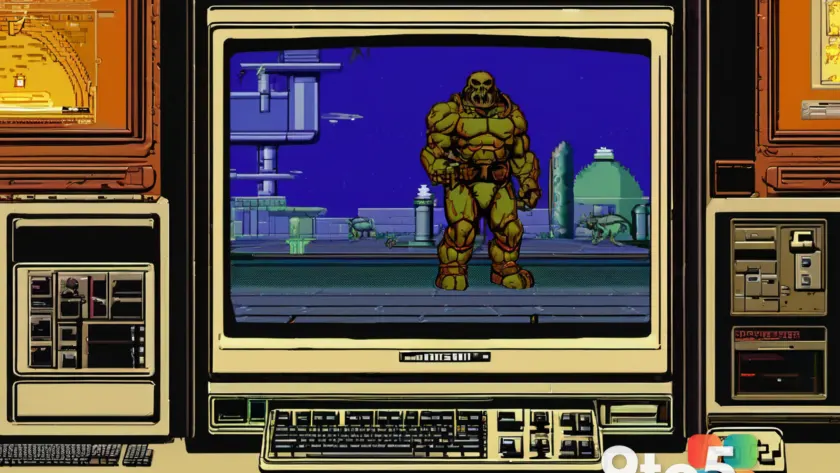
A Microsoft executive has taken the concept of software portability to a new extreme by modifying the classic first-person shooter Doom to run inside MS Paint. According to a report by Neowin, the program successfully pastes the game onto the Paint canvas, though it does so at what the source describes as a “spreadsheet-tier framerate.” This modification turns the familiar drawing interface into an unconventional monitor for one of gaming’s most iconic titles.
The demonstration highlights the flexibility of the Windows environment and the enduring popularity of Doom, which has been ported to everything from toasters to submarines. By forcing the game to render within a non-gaming application, the executive has created a novelty that appeals to both retro gaming enthusiasts and those interested in software reverse engineering.
The Technical Feat of Running Doom in Paint
Running Doom inside MS Paint requires significant modification of the game’s executable. Typically, Doom is designed to render graphics directly to the screen or a dedicated window handle. To force it into Paint, the executive likely utilized a port or a custom build that targets the Paint application’s window handle, tricking the game into believing it is drawing to a standard display.
The mention of a “spreadsheet-tier framerate” suggests that the performance is not optimized for smooth gameplay. Rendering a 3D environment inside a 2D bitmap editor introduces overhead, as the game’s output must be translated into Paint’s drawing commands. This results in a choppy experience, more akin to a slideshow than a fluid action game, but it serves as a proof of concept for the modification.
This approach mirrors other software experiments where developers push applications beyond their intended use cases. It demonstrates that with enough creativity and technical skill, the boundaries of what Windows programs can do are largely self-imposed.
A Nod to Software History and Culture
Both Doom and MS Paint hold significant cultural weight in the history of personal computing. Doom, released by id Software in 1993, pioneered the first-person shooter genre and is renowned for its ability to run on modest hardware. MS Paint, included with every version of Windows since 1.0, is a staple of the operating system, often used for quick sketches, image editing, and, increasingly, as a canvas for digital art and memes.
By merging these two icons, the executive is paying homage to the spirit of experimentation that defined early PC culture. In the 1990s, software modification and reverse engineering were common hobbies, with enthusiasts constantly seeking to push hardware and software to their limits. This project revives that spirit, showing that the curiosity to see “what happens if I do this” is still alive within the company.
The move also humanizes Microsoft’s leadership. Executives engaging in such playful technical demonstrations can foster a sense of community and approachability, bridging the gap between corporate decision-makers and the enthusiast audience that often drives Windows innovation.
What This Means for You
For the average Windows user, this modification is primarily a novelty and a conversation starter rather than a practical tool. It does not introduce new features to MS Paint or Doom, nor does it suggest that Microsoft plans to officially support running games within its paint application.
However, it serves as a reminder of the underlying flexibility of the Windows platform. The ability to modify and repurpose software is a cornerstone of the PC ecosystem, allowing users to tailor their computing experience to their specific needs and interests. Whether through third-party mods, command-line tools, or custom scripts, Windows continues to support a wide range of customization options.
If you are interested in the technical details behind this modification, the source does not currently provide a download link or a step-by-step guide. The demonstration appears to be shared as a video or screenshot showcase rather than a public release. Enthusiasts looking to replicate the feat may need to look to community forums or developer platforms where similar experiments are often discussed.
How to Get It
As the modification is currently a demonstration by a Microsoft executive, there is no official distribution channel available at this time. The source notes that the game runs inside Paint but does not confirm if the modified executable will be released to the public.
Users interested in experiencing Doom in unique ways can explore the vast library of existing Doom ports and source ports available online, which offer various graphical enhancements and compatibility options. For those fascinated by the Paint modification itself, keeping an eye on Microsoft’s official social media channels or the executive’s personal profiles may yield further updates if the project evolves into a public release.
Source: Neowin
Over to you: Have you ever tried running a game in an unexpected program, or is MS Paint strictly for drawing for you?
You may also like
 Train Sim World 6 Drops Support for Xbox One and PS4: What You Need to Know
 OpenAI Fires Back at the Apple OpenAI Lawsuit With Open Letter
 Microsoft Bounty Program Pays $20 Million as AI-Fueled Bug Reports Hit Record High
 Xbox Game Pass Adds Beast of Reincarnation, Gears E-Day Beta, and More in August 2026