NVIDIA has announced a major expansion of its partnership with Taiwanese semiconductor company MediaTek, a deal backed by a $3.5 billion convertible bond investment designed to co-build NVIDIA’s low-power RTX Spark GPUs for Windows PCs.
The announcement marks one of the most substantial chip-industry collaborations to surface recently, and it points to a clear strategic shift: NVIDIA wants its graphics and AI technology embedded in a much wider range of devices than the gaming rigs and data-center racks it has long dominated.
Here is what we know about the deal, what RTX Spark actually is, and why MediaTek is the partner of choice.
The $3.5 billion convertible bond investment
At the heart of the expanded partnership is a $3.5 billion convertible bond investment from NVIDIA into MediaTek.
A convertible bond is a hybrid financial instrument. It starts as a loan that pays interest to the lender, but the holder can later convert it into shares of the issuing company at a predetermined price. For NVIDIA, this means it is injecting capital into MediaTek while retaining the option to take an equity stake down the line, rather than simply writing a large check and walking away.
This structure is common in large tech deals because it lets a buyer commit significant capital without immediately diluting ownership or overpaying for shares at a single point in time. If MediaTek’s stock rises, NVIDIA can convert and benefit; if it stagnates, NVIDIA remains a creditor.
The sheer size of the deal is notable. A $3.5 billion commitment places NVIDIA among the largest institutional backers of MediaTek, a company that has historically relied on fabless manufacturing partnerships and customer orders rather than deep strategic equity investments from chip designers.
What RTX Spark is — and why it matters
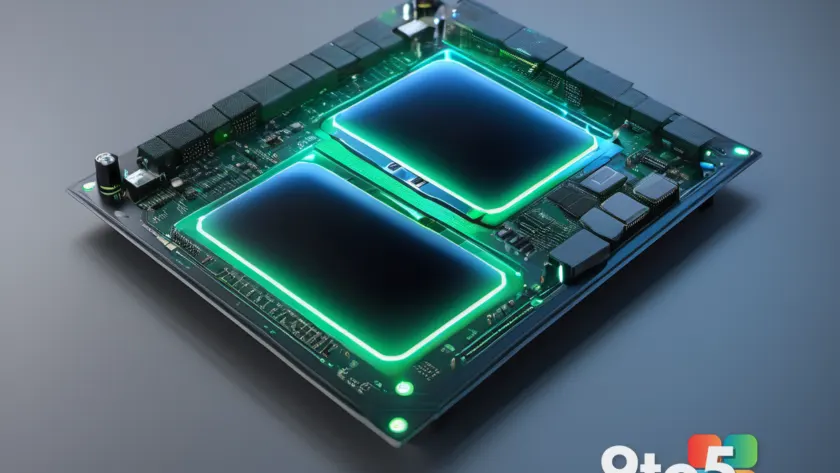
RTX Spark is NVIDIA’s efficiency-focused GPU architecture, built for a different kind of device than the power-hungry GeForce cards found in desktop gaming rigs.
The architecture is aimed at thin-and-light laptops, mini PCs, and other low-power form factors where thermal and battery constraints make high-wattage graphics impractical. In short, Spark is NVIDIA’s answer to the growing demand for capable graphics in devices that do not need a wall outlet feeding them continuous power.
This is a strategic move into a market segment that has been heating up. Qualcomm’s Snapdragon X Elite and MediaTek’s own Kompanio chips have pushed the ARM-based PC market forward, and Intel and AMD are fighting hard to hold their x86 ground. NVIDIA entering the low-power GPU space with a dedicated architecture is a signal that it wants a slice of that fast-growing portion of the PC market.

Why MediaTek
MediaTek is far from a newcomer to the PC chip market. The company has spent years refining its Kompanio line of system-on-chip processors for tablets, Chromebooks, and Windows laptops, giving it real-world experience designing efficient PC silicon.
Pairing NVIDIA’s GPU and AI expertise with MediaTek’s SoC design and manufacturing relationships is a natural fit. NVIDIA brings the graphics and machine-learning IP; MediaTek brings the integration know-how and the supply-chain relationships needed to build chips at scale.
The collaboration is expected to focus on integrating NVIDIA’s Spark graphics into MediaTek’s PC-oriented processors, potentially creating a more complete, power-efficient platform for OEMs building Windows machines. This kind of bundled approach is exactly what many laptop makers have been asking for as they look for ways to compete with Qualcomm’s integrated Snapdragon platforms.
The NVIDIA MediaTek partnership in context
From an editorial standpoint, this deal fits neatly into NVIDIA’s broader push to expand beyond the two markets it has long dominated: gaming GPUs and data-center AI accelerators.
The company has spent recent years reaching into automotive computing, robotics, and now low-power personal computing. Partnering with MediaTek rather than going it alone lets NVIDIA share development risk and move faster, while giving MediaTek a credibility boost and a technological edge over its PC chip rivals.
For the semiconductor industry, the move reinforces a trend of deep cross-company partnerships, as no single firm can easily master every layer of modern chip design, from architecture to manufacturing to supply chain.
What this means for Windows PC users
For the average buyer, the headline takeaway is simple: expect more Windows PCs that deliver strong graphics and AI performance without draining a battery in an afternoon.
If MediaTek and NVIDIA succeed in packing Spark’s capabilities into low-power chips, OEMs will have a new tool for building thinner, quieter, and longer-lasting laptops and mini PCs. That is especially relevant for students, remote workers, and anyone who spends most of their day on a device that lives on a desk or in a backpack rather than plugged into a wall.
It also raises the stakes in the ARM-based PC market. With a major chipmaker like MediaTek now backed by NVIDIA’s technology and capital, the competition against Qualcomm and the traditional x86 players could intensify, which historically tends to drive innovation and, eventually, better value for buyers.
How to stay in the loop
NVIDIA and MediaTek have not released a detailed timeline or specific product roadmap for the RTX Spark-powered devices this partnership is meant to produce. As with most chip partnerships of this scale, expect announcements to come in stages, with design wins and OEM partnerships typically announced before retail products hit shelves.
If you are shopping for a new Windows laptop or mini PC in the coming months, keep an eye out for devices that highlight MediaTek processors paired with NVIDIA graphics. Those will be the first real-world test of whether the partnership can deliver on its efficiency promise.
For now, the deal is as much about strategy as it is about products: NVIDIA is widening its reach into the PC market, and MediaTek is gaining a powerful ally in its push to become a serious player in Windows silicon.
Source: Neowin
Over to you: Would a low-power RTX Spark chip in a thin Windows laptop change your next laptop purchase, or are you sticking with your current setup?