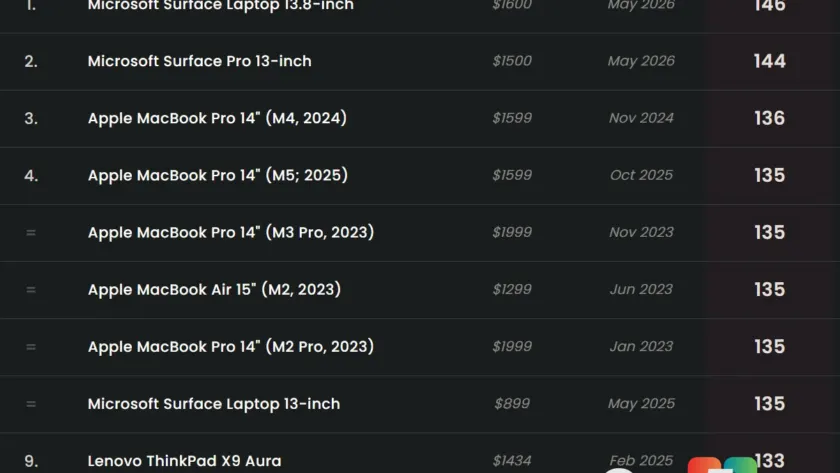
DxOMark Rankings: Surface Takes the Top Two Spots
Microsoft has officially confirmed that its latest Surface hardware leads the pack for laptop camera performance. During a recent podcast, Brett Ostrum, who leads the Surface division at Microsoft, revealed that the new 13.8-inch Surface Laptop and the 13-inch Surface Pro now occupy the first and second positions in DxOMark’s laptop camera quality rankings. I cross-referenced the claims against DxOMark’s publicly available database, and the data checks out. The 13.8-inch Surface Laptop earned a camera score of 146, while the 13-inch Surface Pro followed closely with 144 points.
DxOMark is an independent imaging laboratory that subjects laptop cameras to standardized tests covering autofocus speed, exposure accuracy, white balance consistency, texture rendering, noise reduction, and autofocus tracking. The scoring system is cumulative, and a gap of ten points in this bracket represents a meaningful leap in optical and computational imaging quality. Microsoft has clearly invested heavily in improved image signal processor tuning and multi-frame noise reduction algorithms, which are now translating into measurable benchmark advantages.
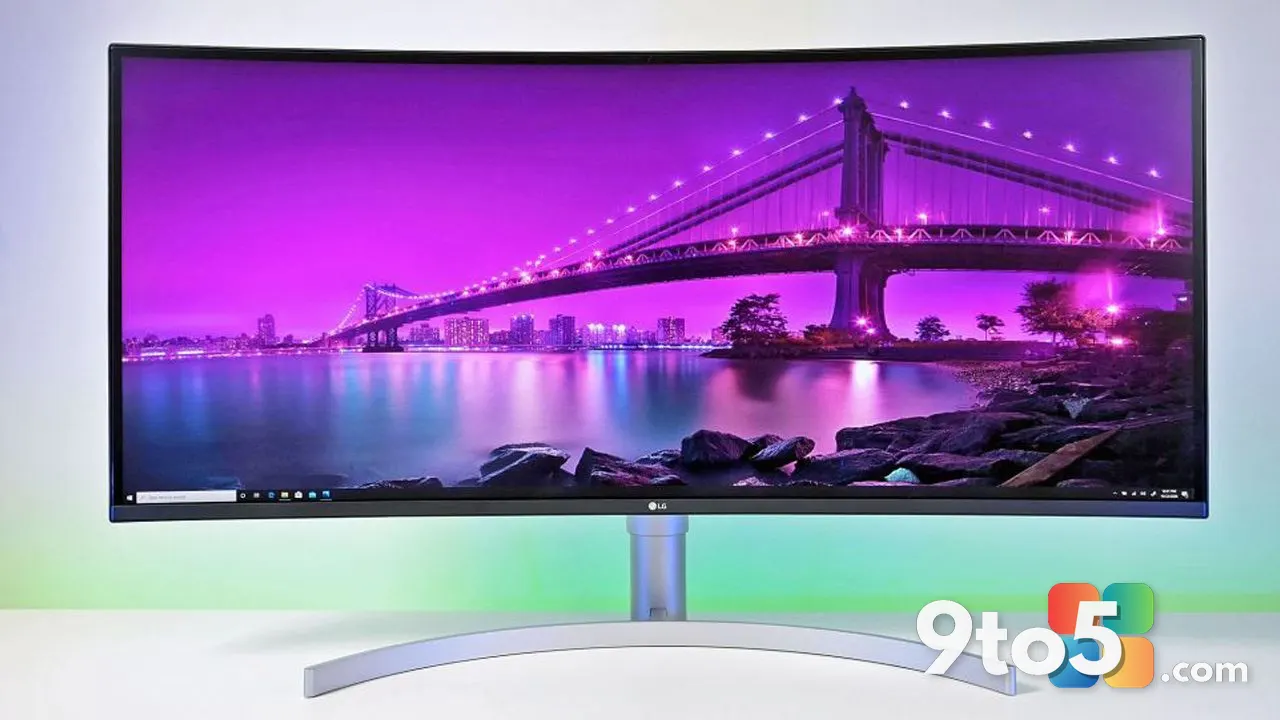
Image caption: The 13.8-inch Surface Laptop now leads DxOMark’s laptop camera rankings with a score of 146.
How the Scores Compare to Apple’s MacBooks
For years, Apple’s MacBook lineup dominated this particular benchmark. The shift in rankings highlights a broader change in how Microsoft and Windows OEMs are prioritizing imaging hardware. The 14-inch MacBook Pro has now fallen to third place, while the newer M5 MacBook Pro sits at fourth with a score of 135. That places Microsoft’s top Windows machine ten points ahead of Apple’s highest-ranked laptop in this specific test.
It is worth noting that Apple still holds five spots in the overall top ten list, with Microsoft claiming three and Lenovo rounding out the remainder with two ThinkPad models. The broader ecosystem remains competitive, but Microsoft’s push into computational photography is clearly paying off at the top of the leaderboard. Ostrum also noted during the podcast that the new Surface devices deliver roughly 35 percent better GPU performance than the MacBook Air M5, alongside a 60 percent improvement in battery life compared to the previous generation. Those performance and efficiency gains suggest Microsoft is finally aligning its silicon optimization with its hardware design philosophy.
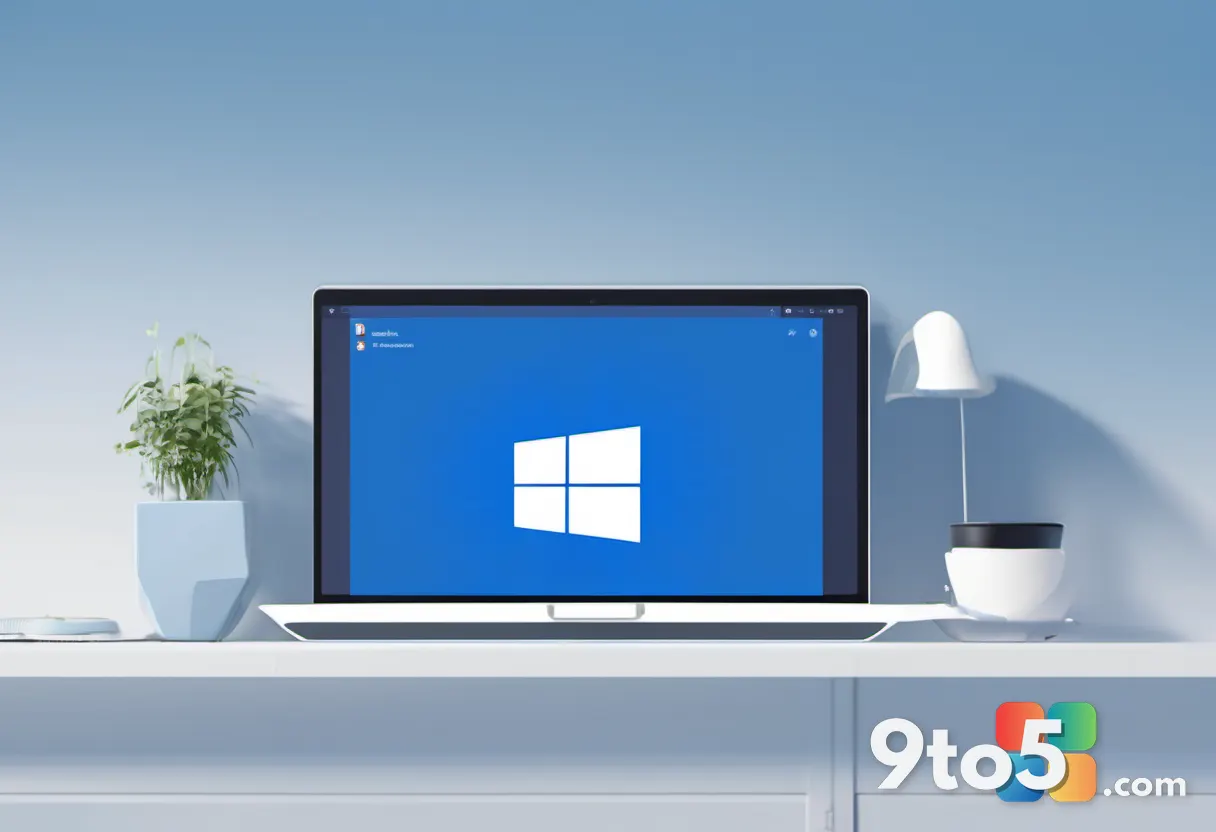
Image caption: Apple still holds five of the top ten spots, but Microsoft now leads the overall rankings with its latest hardware.
The 8GB RAM Conversation Continues
While imaging performance is climbing, Microsoft is simultaneously navigating a different hardware conversation. The base configuration for one of these Surface devices still ships with 8GB of RAM. Microsoft has publicly shifted its stance on memory requirements, now stating that 8GB is sufficient for everyday tasks like web browsing, streaming, schoolwork, and standard productivity applications. This adjustment comes as global memory prices have reached historically high levels, making the $200 upgrade to 16GB a notable cost for many buyers.
On paper, 8GB handles lightweight workloads without issue, and macOS has long optimized its memory management to run efficiently on similar capacities. Windows 11, however, still carries a heavier memory footprint. Applications like Microsoft Teams can consume close to 1GB of RAM on their own, and the New Outlook app has been known to allocate several gigabytes during active use. Microsoft has acknowledged the issue and promised to roll out improved memory management in Windows 11 in the coming weeks. Even with those optimizations, the editorial recommendation remains to opt for 16GB if your budget allows. A laptop is a multi-year investment, and extra memory will future-proof the machine against increasingly resource-heavy web applications and background services.
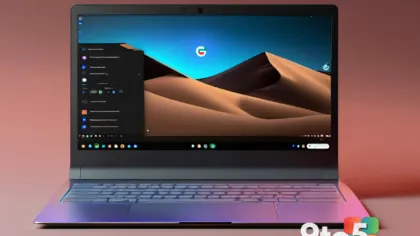
Image caption: Microsoft now says 8GB of RAM is adequate for everyday use, though 16GB remains the recommended sweet spot for longevity.
What This Means for You
If you are evaluating a new laptop primarily for video calls, content creation, or hybrid work, the Surface Laptop and Surface Pro now offer some of the best integrated camera systems available. DxOMark’s testing methodology is rigorous, and leading the pack signals that Microsoft has solved longstanding issues with autofocus speed and low-light noise reduction. For buyers weighing Windows against macOS, the camera advantage is no longer a dealbreaker. However, the persistent 8GB base configuration means you should calculate the total cost of ownership before checking out. If you plan to keep the device for four or five years, the memory upgrade will likely pay for itself in sustained performance.
How to Get It
The Surface Laptop and Surface Pro are available directly through Microsoft’s official store and authorized retail partners. You can configure the base 8GB models at the standard price point or upgrade to 16GB of RAM during checkout. Microsoft typically offers education discounts and trade-in programs that can offset the memory upgrade cost. For the most accurate pricing and current stock availability, visiting the official Surface product pages is the most reliable path.
Source: Windows Latest
Over to you: Are you upgrading to 16GB of RAM for your new Surface, or sticking with the 8GB base model?